PAGE CONTENTS
Objectives
The study focused on the downstream space applications segment and was aimed at defining concrete opportunities and identifying relevant stakeholders in the development of applications and services which could benefit from the deployment of mega-constellations.
“Mega-constellations” is a generic term which describes large satellite constellations in low earth orbit, featuring low latency, global coverage and mass-produced satellites at a reduced cost. Several constellations aimed at serving the broadband market are currently either in operation or being developed.
Following a preliminary research carried out to answer an ESA’s call for tender, six potential areas of interest in which new services and applications could be developed by exploiting the potential of mega-constellations were identified:
- Weather monitoring and forecasting;
- Government and administration outreach;
- Arctic transport;
- Disaster risk alert system;
- Train and tram;
- Containers tracking.
The OneWeb system was selected as the constellation model for this study.
Benefits
Mega-constellations specific features include low latency, global coverage, low-cost broadband connectivity and easiness to deploy and maintain. In addition, mega-constellations generally aim for full-Earth coverage, providing ubiquitous connectivity that other solutions cannot offer. A further technical feature of these constellations is their high-elevation angle which makes them favourable on mountainous terrain.
Thanks to user terminals of mega-constellation systems such as OneWeb, everyday devices can be connected to Wi-Fi/3G/4G/LTE and eventually 5G.
Within the wider scope of bringing socio-economic benefits to end users, these applications are expected to provide opportunities to businesses and private stakeholders and offer services which can subsequently be sold to private stakeholders, countries, national institutions and world banks. For instance, the Arctic Transport application is meant to be developed primarily to facilitate private and commercial navigation in hazardous waters.
Features
The six applications and services are presented here even if three domains were studied in more details and included a road map.
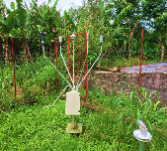 In the Weather monitoring and forecasting domain, a system to provide automated weather stations to African farmers and operators is planned. That should improve local weather forecasting and the prevention of disasters in susceptible areas, and provide information and agri-met applications to the farmer.
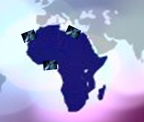 As for the Government and administration outreach domain, the service envisaged is meant to address e-registration of births, especially in Africa’s Least Developed Countries (LDCs) where remote areas do not benefit from internet connectivity and a local registry office.
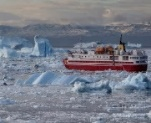 Arctic transport would benefit from mega-constellations’ connectivity for hydrography mapping and monitoring in perilous waters. Maritime transport companies have already stated their interest in a bathymetry device to facilitate navigation and contribute to safety in Arctic channels.
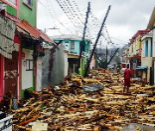 A Disaster risk alert system could support a communication solution based on mega-constellations and useful to local populations during an unfortunate disaster event. Such technology can save lives, by guiding those who can remain connected through such technology.
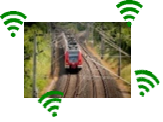 As train operators improve their traffic management and positioning of their assets, this information can be made available to the traveller, who then may be able to optimise their journey in nearly real-time.
 Containers tracking is an application which would bring definite benefits to high-value goods, or dangerous goods for instance. The solution studied here concerns the end-to-end tracking.
Challenges
- The activity relied only on OneWeb’s openly available commercial and technical data, and, when needed, it was benchmarked against other services available on the market.
- Some synergies amongst Weather monitoring and forecasting, Disaster risk alert system and Government and administration outreach were identified from the beginning of the study. Those synergies could potentially allow the development of a multi-service approach.
- It was not always possible to apply a full Competitors Benchmarking Process in this study, because of the granularity of the project itself and the novelty of some activities.
System Architecture
In this activity, OneWeb’s mega-constellation is taken as a reference. OneWeb satellites, located at 1,200km of altitude, serve user terminals through user links in Ku band. Gateway stations provide the service links and connection to the Internet network operating in Ka band.
The identified applications or services will combine software and hardware. Depending on the application and service, the hardware is composed of the OneWeb user terminal coupled with interfaces to sensors such as automated weather stations, and multibeam echo sounder systems.
Plan
The activity was split in four tasks.
- Task 1 reviewed the technical and business assumptions coming from the initiation phase, and collected users needs, using a standard stakeholders map model for each application.
- Task 2 was devoted to the business case analysis, using business models including the Five Case Model, Porter’s Value Chain, a Competitors Benchmarking Process, SWOT analysis, PESTLE analysis, and a risk assessment.
- Task 3 focused on the technical gap analysis, including the evaluation of off-the-shelf systems which could be used to perform part of, or all the actions required by the service and application.
- Task 4 addressed the ranking and selection of three most promising applications and services. A strategic planning approach was applied and led to a roadmap for future developments.
Current Status
The Project is now completed.
The main findings highlighted the benefits brought by mega-constellations.
They consist in their easiness of installation and deployment, maintenance and reliability. Cost has also emerged as one of the main advantages of Mega Constellations when compared to geostationary and other non-geostationary satellite solutions.
The interaction with users has been a constant preoccupation with the aim to validate the thinking behind the study. The mode of interaction was adapted to the sector, the application and the users’ group. Experts participated into conferences, users were interviewed, surveys were carried out, meetings were organised. Through these exchanges, it has been possible to test the concepts and enrich each step of the study with constant feedback.
Another finding regards the development of a data collector model by the experts to specifically assess the services. This model complemented the evaluation provided by other models and identified the stakeholders who are data collector, data processor, or data user. It also contributed to the evaluation of the constellation as a key enabler for the services and applications, as it helped to understand the type of data exchanged and assess whether a mega-constellation is the best solution for the application and service, in terms of cost, coverage, availability, reliability, security, etc.
Overall, a market is foreseeable for each application initially considered, even if some applications and services (e.g. train and tram, containers tracking) would require moving to higher TRLs.
Further to the studies carried out in Tasks 1 to 3, a road map was developed in Task 4 for the most promising three applications and services which were shortlisted based on their potential to develop rapidly as commercial applications:
- e-birth registration;
- integrated Automatic Weather Stations for smart agri-met services;
- facilitated Arctic transport through improved hydrography mapping.
Related Links
Companies