PAGE CONTENTS
Objectives
The increasing data rates demanded by users, and the current rapid increase in the number and scale of satellite communications systems imply an urgent need for greater link bandwidth.
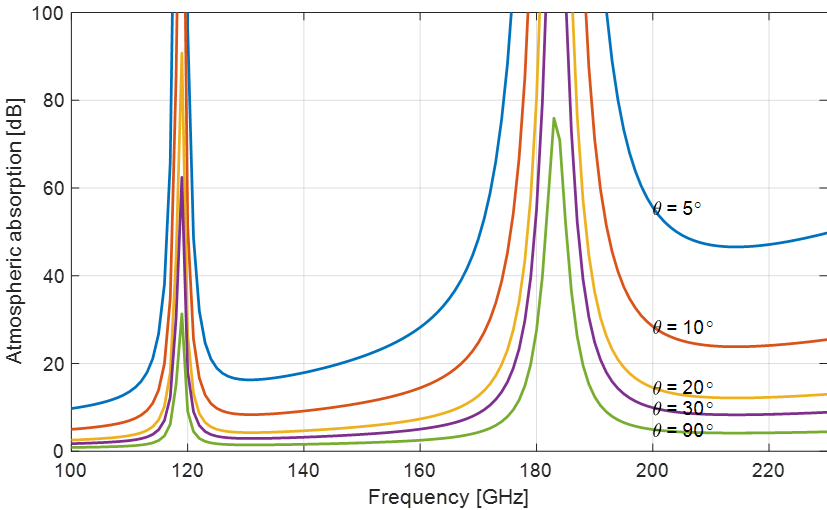
The D-band allocations to satellite services in the 110-170 GHz range offer a potentially valuable resource for delivering the required high-bandwidth connectivity; these bands are starting to be exploited actively for use in terrestrial networks. This study implements the first steps, towards assessing the optimum use for this spectrum in future satellite networks, through detailed computer simulations at system and link level.
This is an inter-disciplinary study requiring expertise in regulatory issues, the physics of radio wave propagation, the evolving architecture and design of communications satellite systems, link performance simulation and modelling, and the design and evolution of millimetre-wave RF devices and components.
Benefits
The work undertaken in the study will inform standardisation, set a roadmap for further research, and highlight commercial opportunities.
Features
The project includes the development of software tools, with which to explore options available for 6G NTN system design, including orbital configurations, frequency plans and choice of modulation and coding schemes (MCS).
Challenges
Standardisation work on 6G non-terrestrial networks (NTN) is at an early stage, so few system parameters or performance targets are known. There is also a lack of empirical data on propagation at these frequencies.
System Architecture
A key aspect of this project is the development of a simulator capable of modelling a wide range of system geometries and components (satellites, stratospheric platforms, aircraft, drones, and terrestrial users).
An important aspect of the study has been the development of a time-series model for propagation impairments on non-geostationary orbit (NGSO) networks.
Plan
Commencing with a review of satellite systems and technologies relevant to 6G, much of the project involves the iterative development of the simulator software, in parallel with the modelling of increasingly sophisticated 6G NTN scenarios, to provide a tool with which to explore utility of D-band spectrum for 6G NTN systems.
Current Status
The project concluded successfully in January 2026.Project participants are planning to take forward the development of the time-series modelling of RF and optical propagation impairments used in the system simulator.