


PAGE CONTENTS
Objectives
The increasing significance of data for our planet’s wellbeing calls for inspiring and innovative educational approaches. This ESA project offers a fantastic opportunity for educators and students to engage with cutting-edge technologies and make a meaningful impact.
Internet of Things (IoT) data plays a larger role in our daily life than just a few years ago and supports the growth of the economy worldwide. At the same time, satellite-based connectivity is transforming society. Therefore, it is paramount that we have a skilled workforce able to implement, use, and further develop the underlying technology. The future of renewable energy, sustainable supply chains, smart farming or climate protection, heavily depends on our capabilities with all things data.
Students in today’s classrooms will be the ones embracing this fourth industrial revolution. To ensure Europe can supply the skilled workforce needed to meet this demand, we must ignite a passion for digital innovation within our schools.
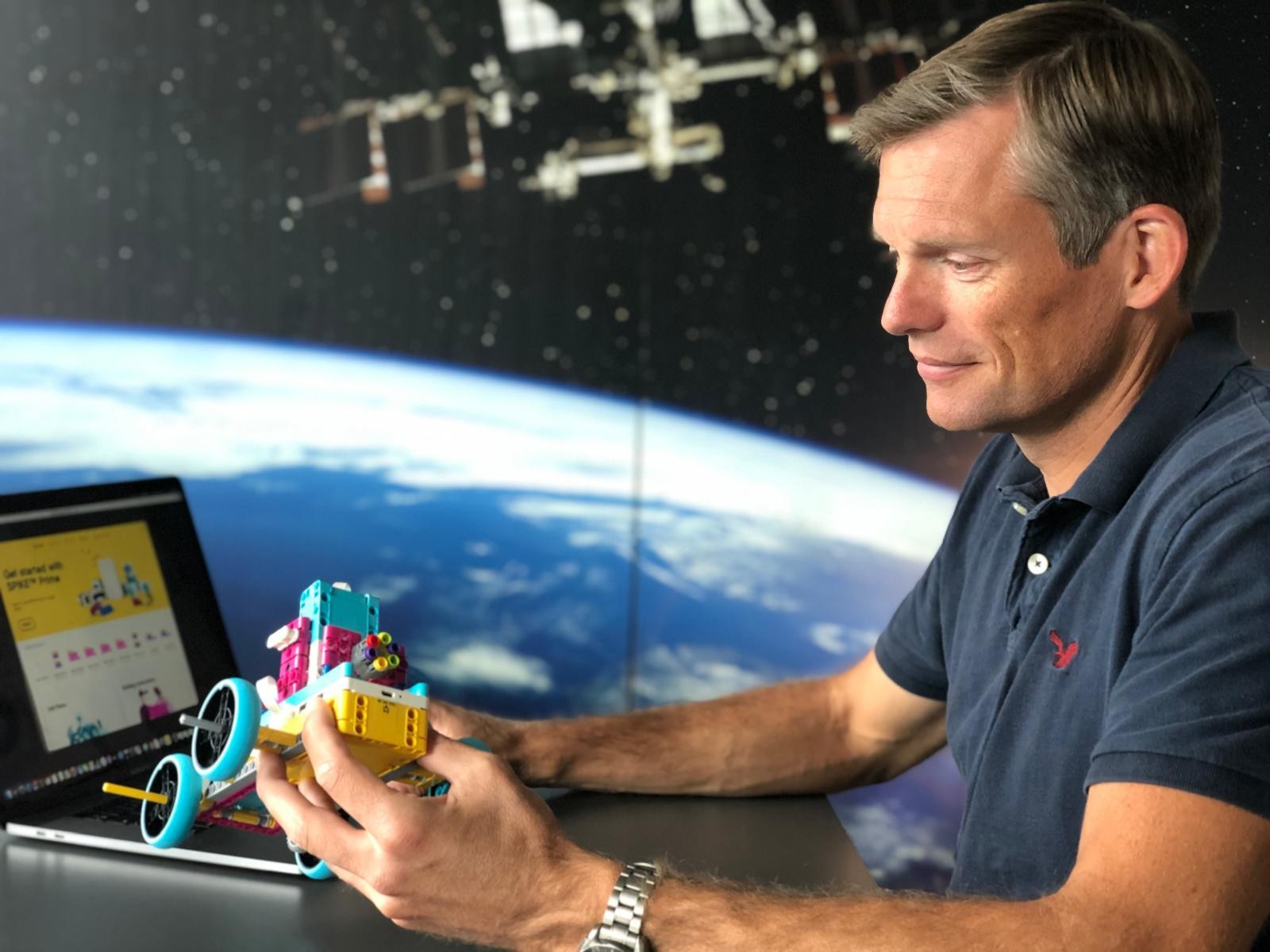
The objective of this ARTES activity is to develop a bespoke satcom IoT solution for educational purposes, providing students with hands-on learning experience in collecting, processing, and transmitting IoT data via satellite networks. This initiative aims to inspire the IoT and satcom experts of the future. In addition to being an intuitive and easy to use framework on its own, the developed components can also be integrated with existing educational kits such as LEGO, Arduino, Micro:bit, and others.
Benefits
Education in natural sciences subjects (maths, science, etc.) expect students to practice prediction, collection, analysis and comparison of data, learning to inform long-term decisions. Today, students must be able to work with data and understand the relevance of big data used in industry, academic and vocational careers.
The developed solution enables teachers and students, be they children, teenagers or young adults, to explore the wonderful world of IoT, sensors, and satellite communications, enabling them to collect data from remote locations. The integration with well-established educational platform (LEGO, Arduino, Makeblock, etc.) makes the product flexible, expanding the possibilities and educational value of the solution beyond what was initially envisioned.
The aim is to create teaching opportunities that give students hands-on experience with satellite communications, real-time sensors, and various other technology domains. This approach enhances their understanding of science and technology through practical application, making learning both engaging and impactful.
Features
The developed solution includes an IoT satcom Device, accompanying software infrastructure, and lesson plans.
The IoT Satcom Device can function as a standalone IoT device, being essentially a satellite communication modem, or as a sensor device providing real-time sensor data to a host computer. The device has a Global Navigation Satellite System (GNSS) receiver built-in, inertial sensors such as an accelerometer and a gyroscope, and environmental sensors for measuring air temperature, humidity and barometric pressure. The radio module provides wireless connectivity to terrestrial and satellite networks.
The accompanying cloud-based software provides a simple, intuitive user interface able to execute multitude operational scenarios. Lesson plans cover engineering topics like sensor technology, data analysis, satellite-based navigation and satellite communications. They also explore how these technologies can be applied in real-life scenarios, providing students with practical and engaging learning experiences.
Challenges
School curriculums are evolving to keep pace with the rapid advancements in technology, including IoT and satellite communications. Many countries are enthusiastically embracing the challenge of integrating new technology into classrooms. While teachers may initially feel apprehensive about teaching subjects outside their expertise, this also presents a wonderful opportunity for professional growth and collaboration. With the right support and resources, educators can confidently deliver valuable and engaging lessons in these cutting-edge fields.
The key challenge of this project is to make teachers feel confident in introducing this new technology to the classrooms by providing a solution with curriculum relevant lesson material, teacher guides, easy-to-use interfaces, technical support and has a clear educational value.
System Architecture
The developed solution consists of an IoT Satcom Device, Data Collection and Visualisation Software, an Interactive Host Software, and educational material.
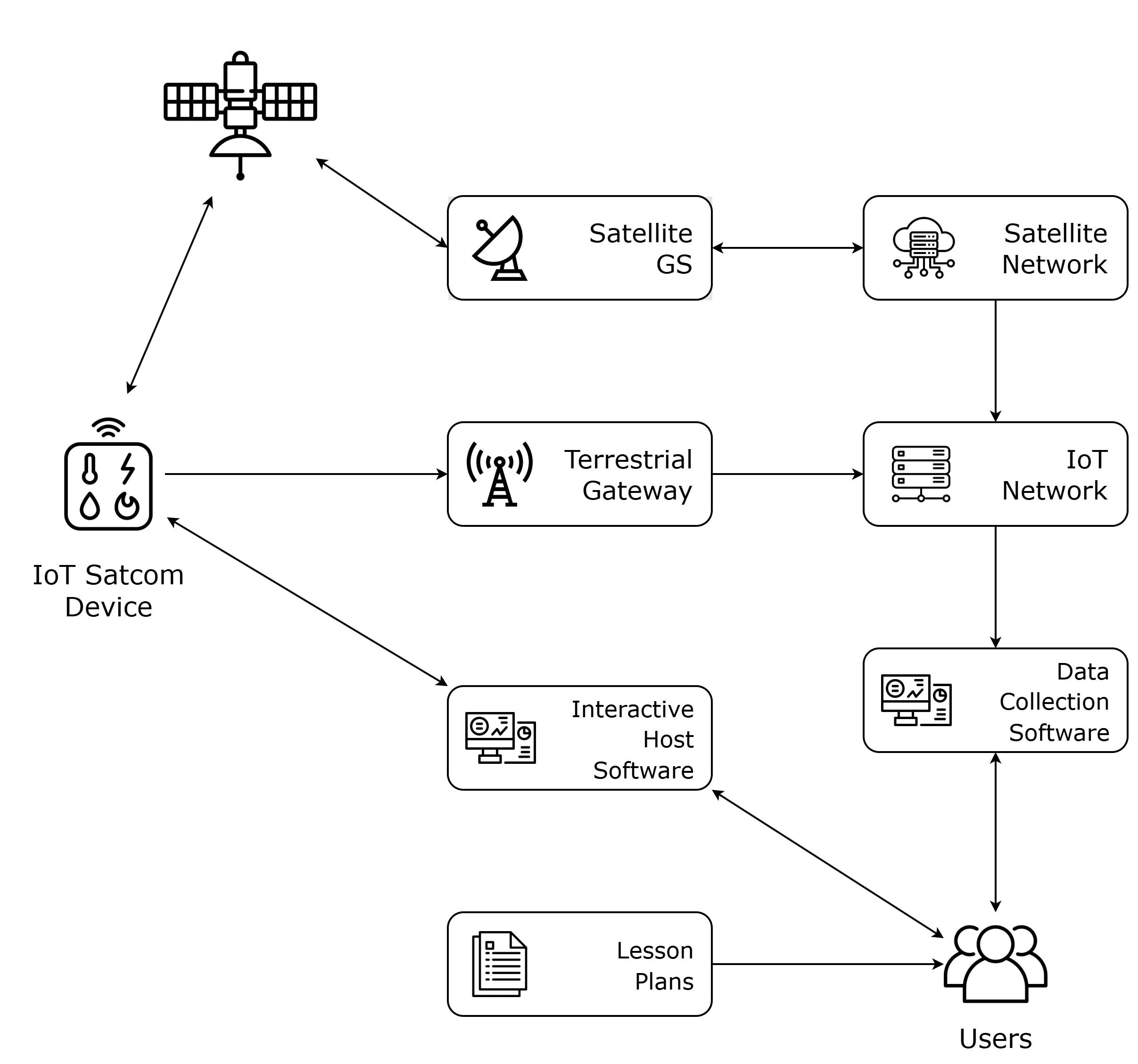
The IoT satcom device functions as a standalone satcom-enabled IoT sensor device transmitting data collected from built-in sensors and GNSS receiver over satellite, as a sensor device sending real-time sensor data to a host computer, or as a satellite modem for an existing sensor setup.
The Data Collection and Visualisation software is a cloud-hosted web application that collects, stores and presents IoT data.
The Interactive Host Software collects and visualises real-time sensor data from the IoT satcom device. It is also deployed as a cloud-hosted web application to give web browser-based access to the device without the need to install software on the computer.
The educational material is a significant element in the complete solution, as it provides the means to introduce advanced technical concepts to teachers and students via hands-on learning and practical activities. To that end, the educational material includes background material and lesson plans, covering core concepts of space science and technology, such as satellite communications, IoT technologies, and applications demonstrating how to solve real-world problems using innovative space-technology solutions.
Plan
The project activities cover development of hardware, software, and supporting educational material, as well as field testing with pilot end users with the following milestones:
• January 2025: Kick-off.
• February 2025: Critical design choices finalised.
• June 2025: Hardware and software design completed.
• July 2025: Field tests with high school students at the European Centre for Space Applications and Telecommunications (ECSAT) during ESA Discovery Week.
• July 2025: Mid-Term Review.
• September 2025: First lesson plans ready for field test with Danish schools.
• November 2025: Field tests with Danish Schools grade 5. and 7.
• December 2025: Hardware, software, and lessons finalised.
• January 2026: Final Review.
Current Status
The activity has been completed in January 2026.
The developed product consists of an IoT satcom hardware device with accompanying software and lesson plans, which are continuously improved and expanded during the subsequent commercial phase. In addition to serving the targeted educational sector, the developed product provides a solid foundation for the development of satcom-enabled IoT products for various industrial sectors.
