

ESA’s CleanWaves initiative: advancing the industry’s space capabilities to safeguard spectrum from harmful Radio Frequency (RF) interference and to use spectrum more effectively
ESA’s Connectivity and Secure Communications Directorate (CSC) has started CleanWaves, an initiative aiming to support European stakeholders to advance their space capabilities to address emerging challenges related to RF spectrum:
- RF spectrum monitoring
- interference detection, location and mitigation
- and spectrum use optimisation
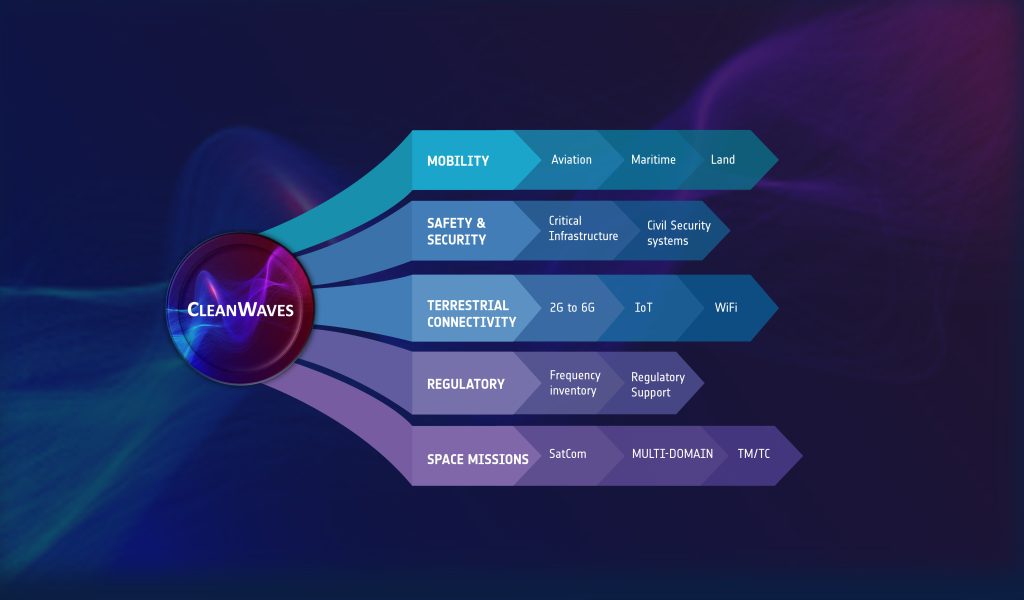
Identify and anticipate needs
Identify and anticipate needs, requirements, boundaries and constraints of users of RF information
Progress industrial capabilities
Progress European industrial capabilities through ESA technology development and validation, including in-orbit demonstration activities
Support technical developments
Support technical developments on their path to markets, including integration with existing ground-based RF services
The overall goal is to position ESA Member States to be
- better equipped to protect European critical infrastructures from rising sources of interference,
- better prepared to use spectrum resources more efficiently,less dependent on non-European technologies and infrastructures and
- better positioned to negotiate and enforce spectrum regulation
The CleanWaves initiative falls under the Space Systems for Safety and Security (4S) programme line of the Advanced Research in Telecommunications Systems programme.
Current ESA funding opportunities
Closing date: 13/02/2026, 13:00 CET
Closing date: 26/06/2026, 13:00 CET
Closing date: 26/06/2026, 13:00 CET
RF Spectrum, a globally contested strategic asset

Radio frequency (RF) spectrum is indispensable to the delivery of all wireless services, including those offered by satellite. The rapid proliferation of new, spectrum-dependent services has driven a surge in demand for clean spectrum. In addition, it has intensified competition for bandwidth usage and increased the odds of spectrum interference.
Whether due to congestion or deliberate jamming and spoofing, RF interference disrupts not only consumer connectivity services but also critical infrastructures such as aviation, maritime, emergency response systems, and broader satellite communication services, causing signal degradation, data loss, navigation errors, and system downtime, leading to weakening the resilience, reliability and continuity of critical communication networks and devices.
In parallel, several nations and many corporations are pioneering spectrum regulations in national and international fora that align with their economic and strategic interests.
What’s more, rapidly evolving technologies are affecting the new balance that the regulatory process must strike between:
- maintaining a stable regulatory framework to protect current licensees and guarantee the reliable delivery of critical services
- fostering innovation and enabling emerging services that depend on timely access to scarce spectrum resources.
Europe is characterised by a diverse regulatory landscape and market environment. RF innovation will enable Europe’s ability to foster a more efficient, flexible, and coordinated use of interference-free radio frequencies, and thus safeguard its economic interests and strategic autonomy.
Recognising the importance of capabilities to detect and respond to interference
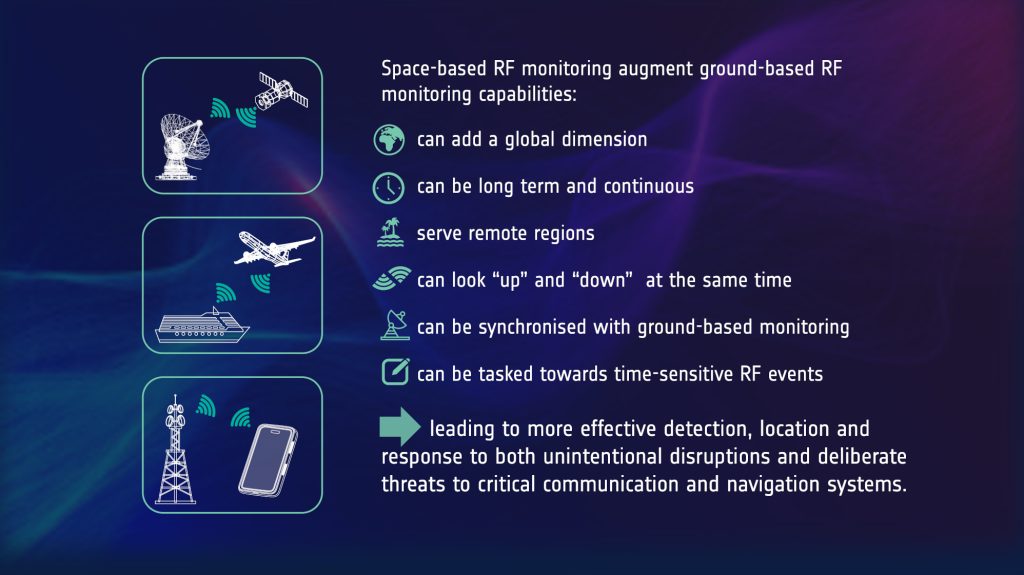
The growing interest of the European Union (EU) in space-based RF monitoring is reflected in its inclusion as a supporting element of the EU Action Plan on Cable Security:
“The Commission will integrate space-based RF detection capacities under the EU Space Programme, complementing the use of existing devices and data from subsea operators.”
In addition, European Union Agency for the Space Programme (EUSPA) in its Requests for Information on RFI (RF Interference) payloads and technology for future satellites states that:
“GNSS Radio Frequency Interference (GNSS RFI), therefore, poses significant risks to GNSS services, impacting various sectors reliant on accurate positioning and timing, including aviation, maritime, and telecommunications”.
COPERNICUS, the Earth Observation component of EUSPA, aims to define and design concepts for a potential future EU GNSS (Global Navigation Satellite System) RFI Monitoring service from Space.
A Joint White Paper for European Defence Readiness 2030 specifically addresses:
“The growing hybrid threats […] electronic interference in global navigation and satellite systems” and calls for “EU-wide advanced electronic systems designed to […] protect and ensure the unhindered use of the electromagnetic spectrum for land, air, space and naval forces and operations.”
In addition, an Opinion published by the Radio Spectrum Policy Group on request by the EC, recognises that:
“mechanisms to address and solve interference, technical studies to address sharing and compatibility may be necessary […] some Member States are engaged in a common satellite monitoring tool enabling collection of data on satellite spectrum usage. This concept might be extended to provide a basis for mutual assessment or confirmation of an interference or noncompliance situation.”
Finally, in his keynote speech at the European Defence and Security Summit on 10 June 2025, Commissioner Kubilius emphasised the critical role of RF monitoring from space, stating that defence readiness in space demands that we “work towards radio‐frequency interference monitoring” as part of the EU’s strategic capabilities in orbit.
In this context, Commissioner Kubilius also emphasised that:
“ESA has valuable engineering expertise and is the trusted partner of the European Commission” in delivering the objectives presented.
Identifying needs, mapping capabilities: ESA engagement with stakeholders
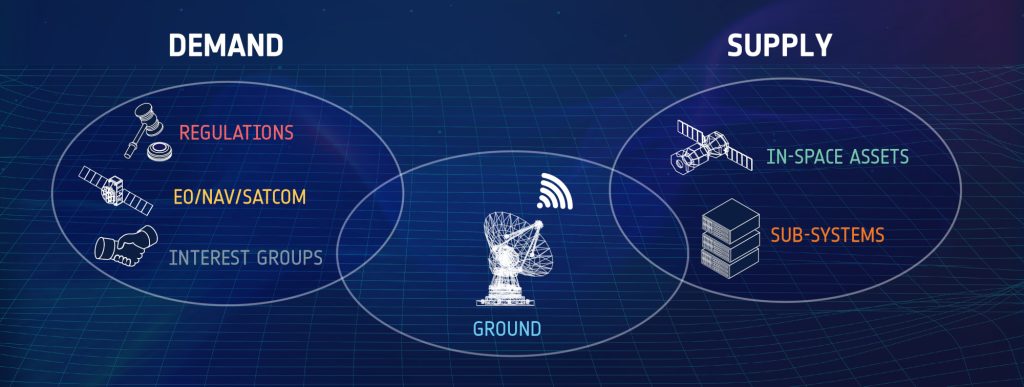
In order to understand the user needs in the civil domain on the one hand, and the capabilities of the European industry to cater to these needs on the other hand, ESA is engaging with all stakeholders, bilaterally or multilaterally as of 2024.
On the demand side: ESA has engaged with representatives of National Regulators, commercial and scientific satellite mission operators and their interests groups. All have expressed an interest to better understand the value of space for RF monitoring.
On the supply side: ESA has engaged with companies and public organisations with ground and space-based assets. They have provided information on existing capabilities, and areas for further development.
Stakeholders welcomed ESA support as a neutral and expert enabler. In particular, ESA’s engagement with user communities is seen as essential to fostering collaboration, aligning interests, and supporting early-stage development.
ESA and ITU collaborate to advance RF spectrum sustainability
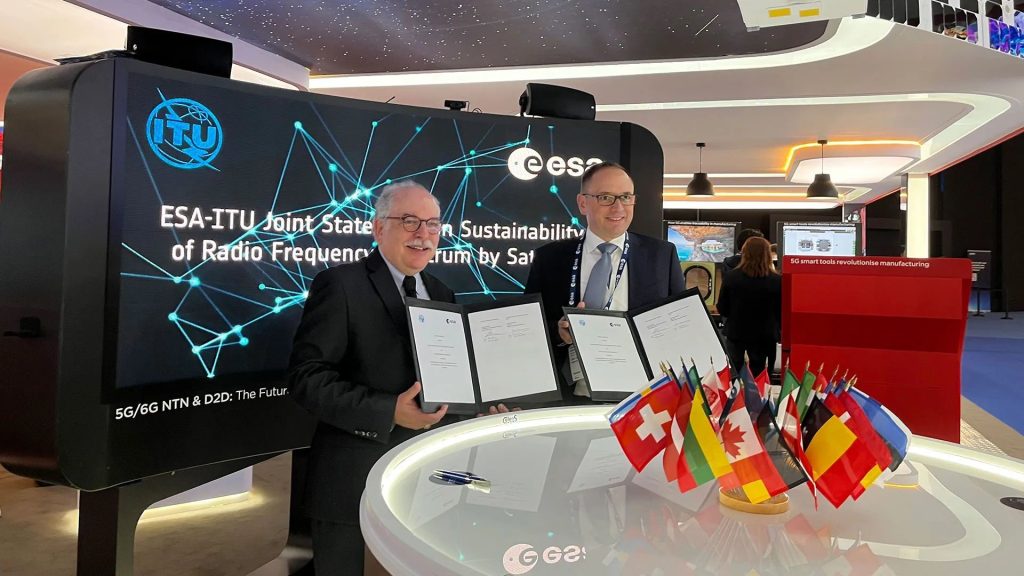
ESA Connectivity and Secure Communications signed a collaboration agreement with the International Telecommunication Union (ITU) in March 2025, which represents a shared commitment to promote the sustainable and efficient use of RF spectrum for satellite communications. This agreement aims at reinforcing ESA and International Telecommunication Union roles as key enablers of an innovative satellite communication ecosystem that can meet growing global demand and respond to increasing spectrum complexity. This effort is supported through an ongoing channel for dialogue and knowledge exchange, towards enhancing space communication systems and advance regulatory frameworks.
ESA supports CEPT’s investigating space-based RF monitoring and efficient use
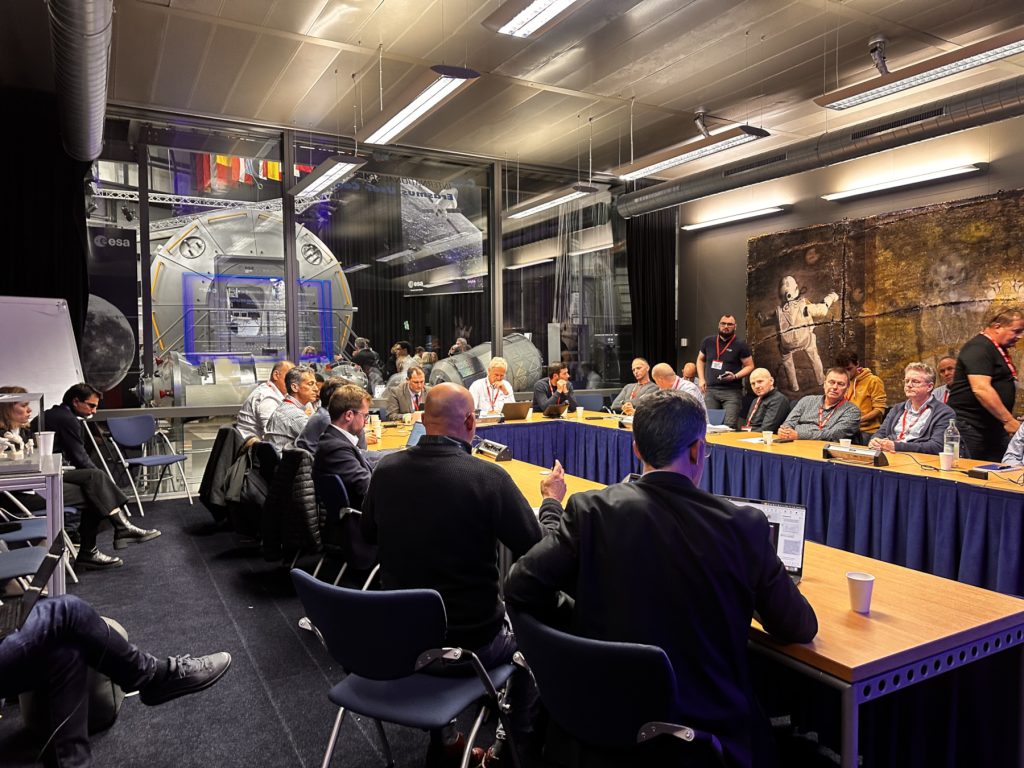
The European Conference of Postal and Telecommunications Administration (CEPT) is investigating the topic of harmful interference, RF monitoring from space, and spectrum sharing. In its published Electronic Communications Committee (ECC) Strategic Plan 2025–2030, the CEPT recognises that:
“Spectrum sharing, where technically feasible, can facilitate effective and efficient use of spectrum in both licensed and unlicensed bands. It can promote innovation by enabling easier and more rapid access to spectrum than some traditional models of making spectrum available (such as clearance). Moreover, the emergence of new technologies may enable the implementation of frameworks that facilitate more efficient use of spectrum.”
In recent meetings, CEPT FM22 (the group dealing with monitoring and enforcement) has published new statistics on harmful interference. These statistics indicate interferences in satellite broadcasting and FSS/MSS services.
ESA has been a regular contributor to CEPT FM22 meetings.
Past and upcoming CleanWaves public consultations

13 November 2025
ESTEC, Noowijk
ESA Workshop with CEPT FM22
4 November 2025
online
ESA MS Industry Briefing on Upcoming ITTs
7-8 October 2025
Geneva, Switzerland
Space Sustainability Forum 2025
ESA contribution
ESA has engaged with all CEPT regulators: they are helping identify use cases and qualify solutions
2-4 September 2025
Athens, Greece
26th International Space Radio Monitoring Meeting (ISRMM)
ESA contribution
18-19 June
Brussels, Belgium
20th European Spectrum Management Conference
ESA contribution
27 November 2024
ESA Conference “Clean Spectrum: Driving Innovation and Growth”: bringing together stakeholders of RF spectrum
White paper
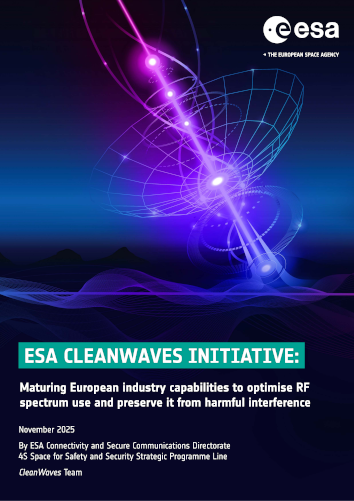
Read and download the full CleanWaves initiative White Paper
Stay tuned for upcoming information sessions and consultations: contact Teodora Secara at cleanwaves@esa.int
RELATED LINKS & CONTACS
CONTACT
Christophe Allemand
ESA HQ
8-10 rue Mario Nikis
CS 45741
75738 Paris Cedex 15, France
+33 (0)153 6976540
Christophe.Allemand@esa.int

CONTACT
Javier de Pablos
ESA ESTEC
Keplerlaan 1, PO Box 299
NL-2200
AG Noordwijk, The Netherlands
+31 648 45 6260
Javier.De.Pablos@esa.int
Advanced Research in Telecommunications Systems (ARTES)
Overview page
Space Systems for Safety and Security programme
Overview page
Documents
Overview page