
PAGE CONTENTS
Objectives
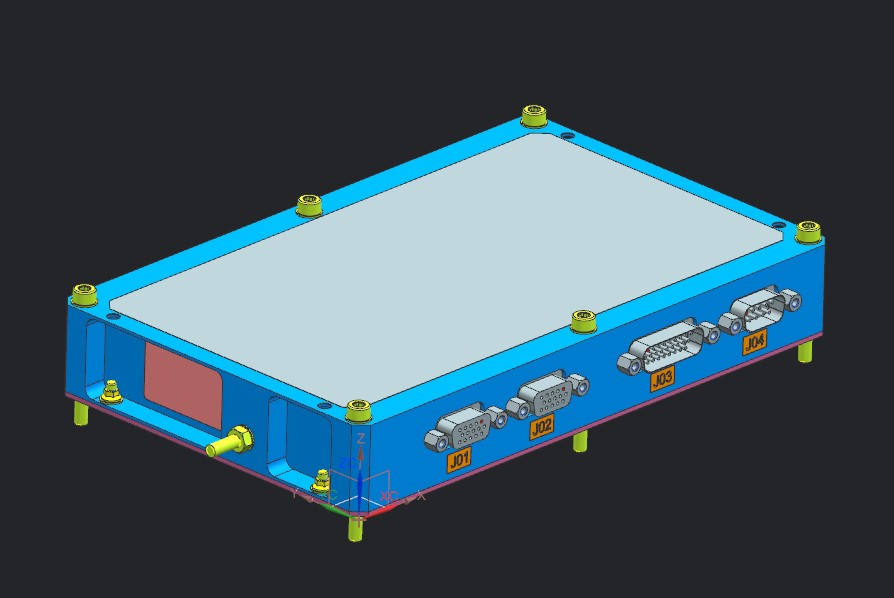
The objective of this project is to develop and qualify a successor of the CODE, a Software Defined Drive Electronics unit (called CODE+) that can be used for a variety of mechanisms and variety of applications but remains small and cost efficient. The perspective versatility will be reached by introducing the possibility of changing the functionality via software while maintaining a qualified hardware architecture. Apart from introducing a micro-controller, the unit shall get a serial command interface, and the capability of processing sensors installed in the mechanism.
Challenges
Beyond Gravity currently offers a high-cost, high performance drive electronics unit with long heritage and a low-cost, low performance unit that was qualified recently. For many customers, the gap between these two products is too big and there was a demand for a product in the middle. The main challenge is to keep the small and lightweight design, without increasing the price significantly. This form factor requirement dictates features of the product.
System Architecture
Typical CODE+ unit consists of 2 identical modules, stacked on top of each other, to provide a cold-redundant drive electronics unit. Alternatively, more modules can be stacked to drive more actuators, or spread the modules around in case redundancy is not necessary.
Unit features a UART TC/TM interface with CCSDS protocol, based on other Beyond Gravity products.
Software is capable of in-flight patching, allowing to add functionality remotely.
Plan
The project has divided to two phases as Technology Phase and Production Phase.
Techology phase initiated by the project Kick-off followed by the key milestones:
- System Requirements Review (SRR)
- Preliminary Design Review (PDR)
- Technology Phase Completion Review
Production phase integrates the findings from the Technology Phase into an updated design. It includes following milestones:
- Critical Design Review (CDR)
- Qualification Review (QR)
- Final Review
Current Status
- System Requirements Review was held in April 2025.
- Design and development processes presented.
- System requirements defined.
- The Mechanical and Electrical design are in the final stages.