ESA supports Loft Orbital’s YAM-8 launch through upgraded platform

Publication date

17 Mar 2025

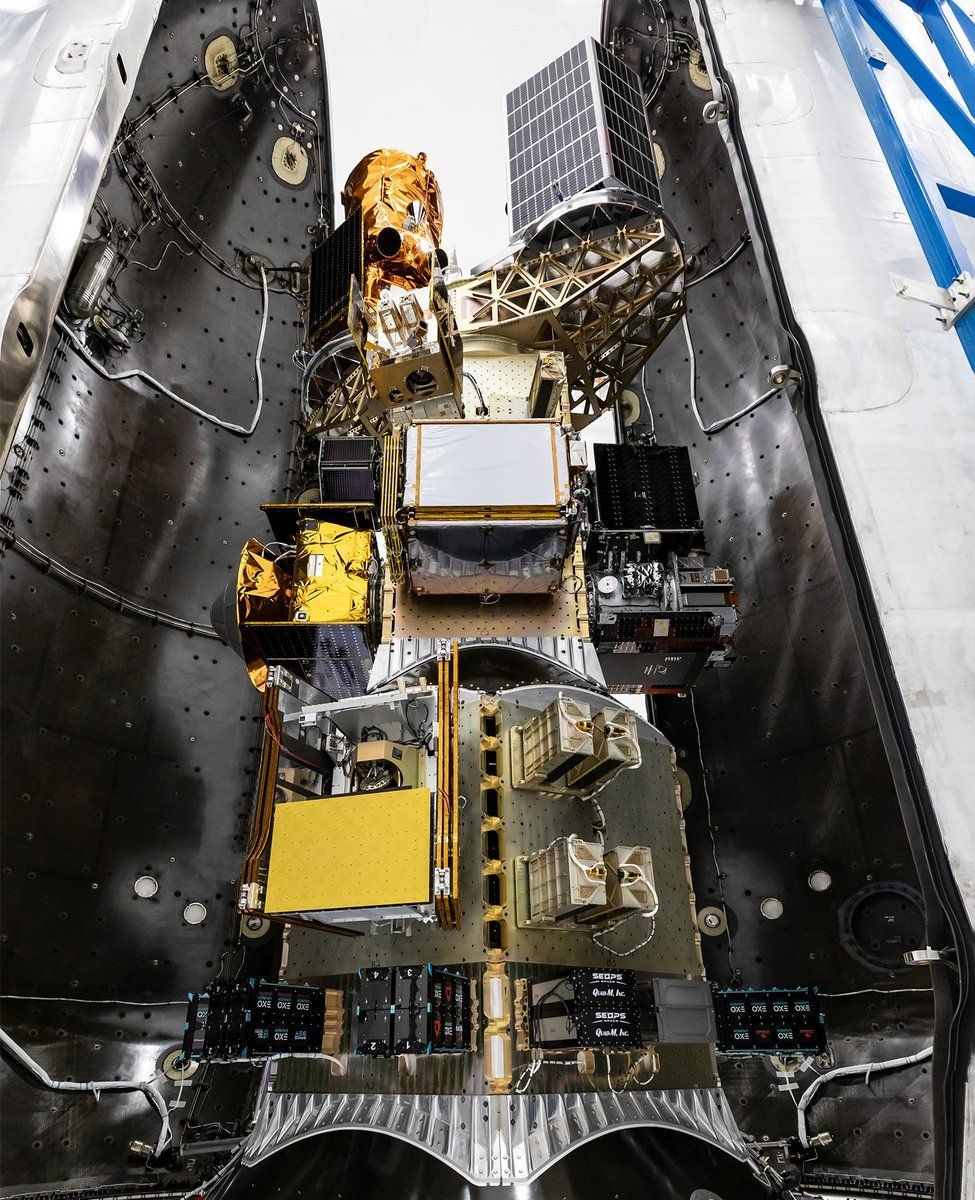
Loft Orbital, with a European Space Agency (ESA)-funded upgraded Airbus Arrow 150 platform on board, has successfully launched its Longbow YAM-8 satellite on Friday 14 March at 23:43 PT (Saturday 15 March 07:43 CET) on a Transporter-13, taking place at Vandenberg Space Force Base in California, United States. The upgrades to the platform were supported under an ESA Pioneer Partnership Project: the In Orbit Demonstrator by Airbus (IODA). 

The YAM-8 will be the first satellite deployed on Airbus’ upgraded Arrow 150 platform which can support multi-mission concepts, technology and in-orbit demonstrations. The launch of YAM-8, which is the first of Loft’s next-gen Longbow satellites, also signifies the first application of the Pioneer IODA development, with Airbus having sold more than 30 platforms to Loft Orbital.

The IODA project represents a collaboration between Airbus France and ESA to facilitate the in-orbit validation of new satellite concepts and demonstrate technological systems, to demonstrate and de-risk missions in low Earth orbit. The development of the innovative upgraded platform came with support from French space agency, CNES (Centre National d’Etudes Spatiales). By investing in advanced satellite technologies, ESA strengthens its Member States’ and Europe’s global competitiveness in space capabilities in a growing and increasingly strategic market.

As part of the project, a spacecraft, payload and ground segment were developed with the goal of validating the system in-orbit. With the contribution of IODA, Loft Orbital is using Airbus Arrow 150 platforms in integrating their customers’ payloads, driving its service business model. Loft Orbital has managed to raise over €300 million since it began, completing a Series C funding round in January 2025, raising €170 million.

ESA’s Pioneer programme focuses on supporting new and emerging providers of space-enabled services. Part of the Advanced Research in Telecommunications Systems (ARTES) programme within ESA’s Connectivity and Secure Communications, Pioneer lowers the barrier to space and nurtures a growing and competitive European space ecosystem. The programme works to ensure that such services are validated through at least one Pioneer flight mission, showcasing the service.

“ESA is proud to be supporting Airbus and the wider Loft Orbital launch of YAM-8, a prime demonstration of our expertise and capabilities in the field of innovative satellite platforms. We are committed to enabling such expertise in adding value across our industry and their customers,” said Laurent Jaffart, ESA’s Director of Connectivity and Secure Communications.

“The launch of Loft’s YAM-8 mission, using the upgraded Airbus Arrow 150 platform, showcases the rich expertise Europe has, with unique and innovative services that will support life on Earth. This is another success of the Pioneer project to enhance the capabilities of our Member States,” said Clive Edwards, ESA’s Pioneer Implementation Manager.

“YAM-8, the first of its kind, represents a major step forward in Loft Orbital’s mission to provide scalable, high-performance satellite solutions. As the inaugural Longbow platform, it enables new levels of capability for our customers, supporting more complex and demanding payloads. The support and collaboration of ESA and CNES in the co-development of this platform have been instrumental in bringing this innovation to the European market and ensuring the success of this mission,” said Emmanuelle Meric, General Manager at Europe, Loft Orbital.

Florence Hauss, Loft Project Manager at Airbus said: “Loft Orbital has successfully launched YAM-8, its first satellite built on the Longbow platform, a key milestone in its partnership with Airbus. This innovative platform, derived from the trusted Airbus Arrow, exemplifies Loft Orbital’s commitment to delivering high-performance, cost-effective satellite solutions, enabling rapid and seamless payload deployment for a new era of space exploration.”

ESA and AAC Clyde Space set sail on project to enhance maritime capabilities from space

Publication date

20 Feb 2025

The European Space Agency (ESA) and UK-based New Space company AAC Clyde Space have formed a partnership to drive space-enabled capabilities to support maritime operations across the globe. Worth €0.85 million, the first phase of the project – known as INFLECION – will focus on defining user needs and requirements and is scheduled to be completed by the close of 2025.

Co-funded by the UK Space Agency through ESA’s Advanced Research in Telecommunication Systems (ARTES) Partnership Project programme within ESA’s Connectivity and Secure Communications, INFLECION – which is worth a proposed total of €30 million – will address the key challenges facing maritime domain awareness. The project is currently planned to be operational in 2028, and will work to enhance safety, efficiency, compliance and sustainability for global maritime stakeholders.

INFLECION is being built to provide real-time insights for vessels, shipping companies, insurers, environmental agencies, and coastal authorities, boosting efficiency, reducing emissions, and combatting illegal activities. The project will develop and leverage VHF Data Exchange System (VDES), Signal Intelligence (SIGINT), and Synthetic Aperture Radar (SAR) technologies.

Maritime routes are becoming increasingly congested due to supply-chain disruptions, shifting trade patterns, and geopolitical tensions. With these challenges comes opportunity for satellite communications to support and enhance maritime operations from orbit.

AAC Clyde Space lead a consortium of UK organisations, including AST Marine, Bright Ascension, Craft Prospect, Heriot Watt University, Horizon Technologies, ICEYE UK, Omanos Analytics, Nash Maritime, Plymouth Marine Laboratory, Saab UK, and University of Strathclyde.

In addition to supporting customers, the project also algins internationally through the International Maritime Organisation’s (IMO) e-Navigation strategy. This strategy works to meet current and future user needs of shipping, providing harmonised marine navigation systems as well as supporting shore services, to ensure safer and more efficient navigation.

“Shipping is a critical part of our global economy, responsible for around 90% of world trade. ESA is proud to be supporting and driving the use of satellite communications in the maritime sector, showcasing the vital role such technologies are continuing to play in enabling growth and providing safety for stakeholders across the sector,” said Laurent Jaffart, ESA’s Director of Connectivity and Secure Communications. “Our partnership with AAC Clyde and its consortium also takes the protection of marine environments into consideration.”

“INFLECION is a key step in AAC Clyde Space’s strategy to grow space data as a service,” says Luis Gomes, CEO of AAC Clyde Space. “With this project, we are using space technology to tackle real challenges in the maritime industry. Together with our partners, we are setting a new standard for safety, efficiency, and sustainability at sea.”

“The technological brilliance of INFLECION is its integration of VDES, SIGINT, and SAR technologies. They offer powerful tools for addressing challenges in global shipping and coastal monitoring. This innovative system will help improve safety, detect illegal activities, and protect critical marine ecosystems,” says Andrew Carrel, President of Data and Services at AAC Clyde Space.

ESA’s Pioneer Partnership Project to support new multifunctional satellite constellation

Publication date

02 Dec 2024

ESA has signed the contract for its latest Pioneer Partnership Project – ESpaDA (Engine for Space Data Analysis) with Methera Global Communications Ltd, headquartered in the United Kingdom, on 31st October 2024. The project will develop hosted payload services onboard Methera’s multifunctional constellation of spacecraft operating in Medium Earth Orbit (MEO).

This marks the eighth project which has been contracted under the programme, showcasing the interest and growing technological capabilities being developed under ESA’s Pioneer programme. The Methera multifunctional constellation will provide high-capacity, highly focused broadband to targeted geographic locations, satisfying the needs of a range of commercial and governmental customers.

The nature of the Methera multifunctional constellation, with spacecraft on multiple orbital planes at MEO altitudes, has advantages for a range of applications including space domain awareness, geolocation and interference management.

The ESpaDA project will introduce the infrastructure needed to offer hosted payload services into the Methera constellation. This will enable the collection, analysis and delivery of space-based data, providing insights and actionable intelligence to Methera customers. The project will include the in-orbit validation of two application payloads based on these MEO hosted services.

ESA’s Pioneer Partnership Projects works to increase industry competitiveness by supporting the emergence of new space mission providers, offering a one-stop-shop for customers wishing to demonstrate innovative space solutions. The projects are targeted at affordable and timely access to space, lowering the barriers for demonstration of pioneering services, and include one or more in-orbit validation missions to demonstrate and showcase the service.

Of the eight Pioneer Partnership Projects that are under contract, a total of 21 nanosats have been launched so far, with 3 more scheduled to be launched in 2025, demonstrating the high interest in the programme.

“ESA is proud to support this innovative project within the European space ecosystem developing novel MEO applications through our Pioneer Partnership Projects programme. Working with Methera Global Communications, ESpaDA will offer a unique hosted payload service, showcasing the importance of MEO orbits in space domain awareness, interference management, and geolocation,” said Clive Edwards, ESA’s Pioneer Implementation Manager.” 

“We are delighted by the support received from the UK and European Space Agencies as well as our partners for this exciting opportunity to develop an AI-powered Engine that will utilise our unique MEO positioning to harness intelligent data to support sustainable development goals, protect critical infrastructures and our planet,” said Chris McIntosh, CEO, Methera.

The Pioneer Partnership Project programme falls under ESA’s Advanced Research in Telecommunications Systems (ARTES) 4.0 programme. As part of the Partnership Projects programme line of ESA’s ARTES, it drives innovation by federating ambitious large-scale, long-term collaborations between ESA, private companies, and satellite operators.

Through projects like ESpaDA, the programme establishes ESA as a key partner in developing major satellite communication systems, new value-adding solutions and services, and providing in-orbit validation. It focuses on substantial, industry-shaping initiatives that require significant investment spanning over several years, such as the development of satellite constellations.

By closely aligning technological ambition with commercial strategy, ESpaDA and other Partnership Projects enable European and Canadian organisations to push the boundaries of satellite communications and strengthen their competitiveness on the global market.

xSPANCION

- Xtended Satellite Production ANd ConstellatIon OperatIoNs

STATUS | Ongoing
STATUS DATE | 09/03/2022
ACTIVITY CODE |

Objectives

  1. To complete downstream vertical integration based on a single system meta-model

  2. To develop and implement key constellation enabling spacecraft technology

  3. To extend production capability in a scalable manner to deliver constellations of spacecraft

  4. To establish a scalable lean interface to control constellations of spacecraft

  5. To design a constellation mission framework including licensing filing and launch coordination

  6. To generate an interface for customers to access mission data efficiently

  7. To successfully demonstrate the innovative developments through the manufacture of 10 satellites (launch and operation of 4 of these)

Challenges

xSPANCION focuses on addressing several challenges facing the market including larger volumes of data generated from more capable payloads, to be transmitted at low latency; faster time to orbit and maximum service lifetime to optimise opportunities for revenue generation; data availability, accuracy and reliability.

System Architecture

This model-based approach creates the backbone of the project, integrating all workstreams together to achieve the project goal.

System architecture


Plan

The Project is organised in three phases:

Phase 1 – Definition

Establishing requirements across the six workstreams and performing initial design of the xSPANCION project architecture for the full project lifecycle, towards the Preliminary Design Review, conducted jointly with the European Space Agency (ESA). Together with the partners, AAC Clyde Space has agreed to accelerate the project by kicking off the Spacecraft Manufacturing Preparation Phase.

Phase 2 – Implementation

The Manufacturing Preparation Phase includes detailed designs of constellation-ready spacecraft, development of digital production processes, constellation operations capability together with licensing, regulation, and more efficient launch coordination to deliver a step-change in capability to deliver constellations. 

Phase 3 – Demonstration

AAC Clyde Space continues discussions with selected customers to enter agreements for data delivery from the constellation service. This phase includes the manufacturing of 10 novel, constellation-ready spacecraft and the launch of 4 demonstration spacecraft that will validate developments across the six workstreams.

Current Status

Phase 1 – Definition has been completed with the successful conclusion of the Preliminary Design Review. Phase 2 – Implementation commenced in November 2021 and is proceeding with preparation for the Critical Design review in March 2022. Phase 3 – Demonstration is expected to commence within the first six months of 2022.

John Shirlaw

Mr Clive Edwards

Philippe Sivac