Electra

Heritage
Connectivity


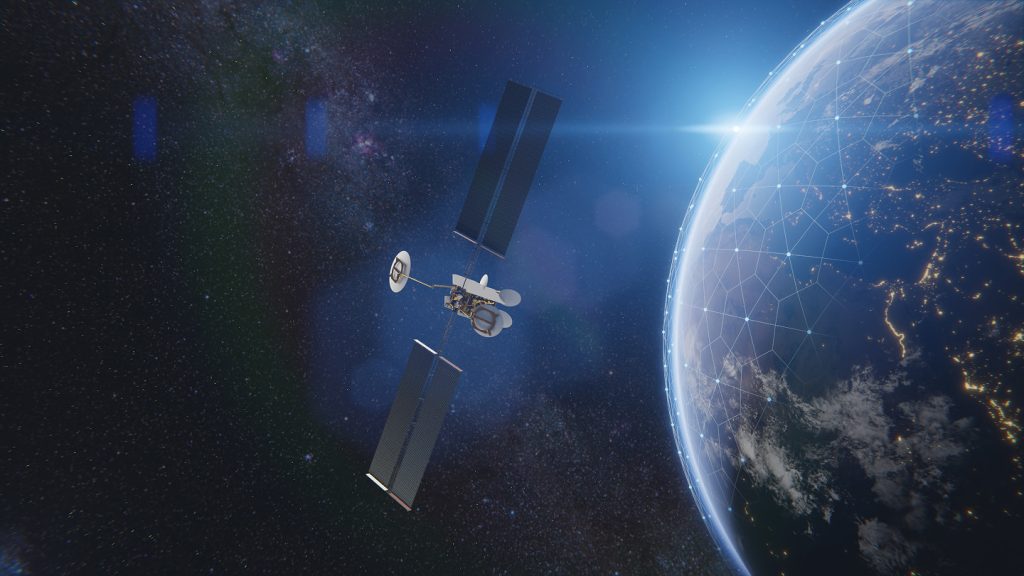
The Electra project is one of the European Space Agency’s (ESA) most significant telecommunications satellite initiatives, representing a major step in Europe’s evolution toward all-electric propulsion technology

Advanced Research in Telecommunications Systems (ARTES)programme in partnership with SES in Luxembourg and OHB SE in Germany, Electra aims to create a new generation of medium-sized geostationary Earth orbit (GEO) satellites that are lighter, more efficient, and more cost-effective.

This project demonstrates ESA’s strategic approach to public-private collaboration: sharing risk with industry to advance innovation and ensure Europe remains competitive in the fast-changing global satellite communications market.

The origins of Electra

In the early 2010s, ESA and its industrial partners recognised a global trend toward smaller, more flexible satellites that could deliver high-performance communications services while lowering launch and operational costs. Traditionally, large GEO communications satellites relied on chemical propulsion for orbit raising and station keeping, making them heavy, expensive to launch, and limited in flexibility.

Electric propulsion promised a solution. It uses ion or plasma thrusters powered by solar electricity to generate a steady, highly efficient thrust. Although electric orbit raising takes longer, it dramatically reduces fuel mass, allowing for smaller spacecraft, more payload, or lower launch costs.

In 2013, ESA formally approved Electra as a Partnership Project under ARTES, with SES as the anchor customer and OHB as the prime contractor, to develop, qualify, and fly Europe’s first all-electric GEO satellite platform.


Objectives of Electra 


Electra’s central objectives include:

Developing a European all-electric medium-size satellite platform capable of supporting commercial telecommunications payloads of around 300 kg and 3 kW power.
Reducing launch and operational costs through significant mass savings to enable dual launches and lower-cost launchers.
Demonstrating in-orbit performance of electric orbit raising and station keeping.
Boosting industrial capabilities across Europe by fostering technology transfer, component development, and manufacturing expertise.
Establishing European non-dependence in the growing electric satellite market.


By achieving these goals, ESA seeks to ensure Europe’s competitiveness in a market where operators increasingly demand cost-efficient, flexible, and sustainable satellites.


Electra’s technological innovations

All-Electric propulsion
The satellite uses electric thrusters (such as Hall-effect or gridded ion engines) for both orbit raising and station keeping. Although the orbit-raising phase can take several months, the mass savings are transformative, providing an operational lifetime of over 15 years.
Lightweight power subsystem
High-efficiency gallium-arsenide solar arrays generate up to 3 kW of power for the payload and propulsion system.
Compact structure
Modular mechanical architecture derived from SmallGEO ensures compatibility with various payloads, offering flexible mission configurations for telecom operators.
Advanced avionics and autonomy
The platform incorporates intelligent onboard management systems to handle long-duration electric orbit raising autonomously.
High reliability and reduced cost

By reducing the need for heavy chemical propellants and simplifying mechanical systems, Electra offers lower launch mass, reduced costs, and improved environmental sustainability.


Industrial partners 

Supported by ESA, Electra brings together a network of European industrial partners, with OHB SE as the prime contractor responsible for the satellite platform, known as the SmallGEO bus, and SES as the commercial partner and operator.

OHB SE developed the all-electric variant of the SmallGEO platform, integrating new propulsion and power systems tailored for long-duration electric orbit raising.

SES, one of the world’s leading commercial satellite operators, provided mission requirements, payload integration support, and the operational perspective for the first Electra satellite.

Other European contributors include ArianeGroup (propulsion subsystem elements); OHB Sweden (electric propulsion thruster integration), RUAG Space (mechanical structures and antenna supports) and Airbus Defence and Space (payload and system-engineering expertise).


The SmallGEO heritage

Electra builds upon ESA’s SmallGEO platform, itself developed under the legacy ARTES programme with the first flight – HispaSat 36W-1 – launched in January 2017. SmallGEO was designed as a modular, medium-size GEO platform with flexible payload accommodation for different missions.

Electra extends this heritage by replacing the chemical propulsion system with an all-electric one, drastically reducing the satellite’s launch mass from around 3.2 tonnes to about 1.8 tonnes while maintaining similar payload capacity.

This approach allows the Electra spacecraft to share a launch vehicle with other satellites, reducing launch costs, and offering operators a green propulsion alternative with no toxic propellants.

RELATED LINKS & CONTACS

European Data Relay System (EDRS)

Heritage
Connectivity


The European Data Relay System (EDRS), often called theSpace Data Highway, is one of the most ambitious and transformative programmes undertaken by the European Space Agency (ESA)


It represents a major leap forward in how Europe transmits, processes, and delivers data from space.


EDRS enables near real-time data relay between low Earth orbit (LEO) satellites and the ground via geostationary Earth orbit (GEO) satellites equipped with laser communication terminals. By acting as a relay network in space, EDRS dramatically reduces data latency, from hours to minutes, and increases operational efficiency across Earth observation, security, emergency response, and scientific missions.


Developed under ESA’s Partnership Projects, EDRS was developed with Airbus Defence and Space, with key contributions from DLR, Tesat-Spacecom, OHB, and Avanti Communications. The system showcases the effectiveness of public–private cooperation in bringing advanced European space infrastructure to the global market.


The EDRS vision

Before EDRS, satellites in low Earth orbit could only transmit their data when passing over a ground station, limiting contact time to a few minutes per orbit. This created delays in accessing critical Earth observation data used for applications like disaster management, maritime surveillance, and environmental monitoring.

It was recognised that Europe needed a fast, secure, and autonomous space data relay system. The solution was to use laser communication between satellites in different orbits, connecting a constellation of LEO satellites to geostationary relay nodes, which maintain a continuous line of sight to ground stations.

This vision became the European Data Relay System (EDRS): a network providing continuous data connectivity between orbiting spacecraft and Earth-based users, effectively serving as a fibre-optic link in space.

Technological Foundations

The technological heart of EDRS lies in its Laser Communication Terminals (LCTs), developed by Germany’s Tesat-Spacecom in cooperation with the German Aerospace Center, DLR.

Each LCT uses highly precise optical systems to exchange data via laser beams between satellites separated by up to 45,000 kilometres, achieving transfer rates of up to 1.8 gigabits per second (Gbps). These terminals can lock onto each other with microradian precision, roughly the equivalent of targeting a coin from 1,000 kilometres away.

EDRS also supports traditional Ka-band radiofrequency (RF) links for downlinking data to the ground and for providing redundancy.

This hybrid laser-RF (radio frequency) architecture gives the system the flexibility to operate with a wide range of spacecraft and users, from Earth observation missions like Copernicus Sentinel satellites to crewed spacecraft such as the International Space Station (ISS).


System architecture


EDRS currently consists of two main nodes in geostationary orbit and a network of ground stations:

Lunar Satellite Constellation
EDRS-C, launched in August 2019 on an Ariane 5, operating at 31° East as a dedicated satellite built by OHB SE in Germany.
EDRS-D, a future third node, is being developed to extend global coverage, including over the Asia-Pacific region.

The ground segment includes Mission Operations Centres in Ottobrunn in Germany and Redu in Belgium, supported by optical ground stations and secure data networks.

Together, these components form a flexible and scalable architecture; designed to support a variety of missions simultaneously, each using different data formats and communication requirements.


Operational Use and Customers

The first operational user of EDRS is the Copernicus Sentinel-1 and Sentinel-2 missions, operated by ESA and the European Commission. These satellites provide radar and optical imagery for environmental monitoring, climate change research, and emergency response.

Through EDRS, Sentinel satellites can downlink data continuously to ground within minutes after acquisition, rather than waiting for the next overpass. This has transformed how Europe manages near real-time applications, such as detecting oil spills, tracking ice movement, and assessing flood damage.

EDRS also supports the International Space Station, by providing high-speed communication for scientific experiments; commercial and governmental users, including military and security agencies, for secure data relay, as well as the Copernicus Sentinel satellites for Earth Observation. It is intended to support future potential lunar communications under ESA’s Moonlight programme.


Strategic Impact for Europe

EDRS strengthens Europe’s technological sovereignty in space communications, giving ESA Member States a secure, independent infrastructure for critical missions.

It also catalyses industrial growth: over 40 European companies participated in EDRS development, creating a robust ecosystem in optical communications and satellite networking. The technologies pioneered by EDRS are now being leveraged in next-generation systems like ESA’s High-thRoughput Optical Network (HydRON) and Quantum Key Distribution (QKD) missions.

Environmentally, EDRS improves the responsiveness of Earth observation systems, helping authorities make faster decisions during natural disasters and humanitarian crises.

Every Community Online (ECO)

Heritage
Connectivity

The European Space Agency (ESA) has long sought to leverage its space-infrastructure expertise not just for exploration, but for societal benefit – especially in regions underserved by traditional terrestrial communications. 

One such effort is Every Community Online (ECO), a public-private partnership under ESA’s Advanced Research in Telecommunications Systems (ARTES) programme. ECO was designed to bring affordable, reliable broadband connectivity via satellite to schools, health centres, community hubs and remote populations in Sub-Saharan Africa and related emerging markets.

The connectivity challenge

In many parts of Sub-Saharan Africa, fixed-line broadband and reliable mobile data are still scarce or prohibitively expensive. In 2019, around 28% of urban African locations and just 6% of rural locations had internet access.

With next-generation satellites offering higher throughput at lower cost, there remains a gap: ground-segment technologies, service delivery platforms and business models suitable for low Average Revenue Per User (ARPU) environments had not yet matured. ECO emerged as an effort to fill that gap: to validate and roll out ground-segment solutions optimised for High-Throughput Satellite (HTS) use and tailored business models for low-income contexts.

ECO responds to the digital divide by leveraging telecommunications infrastructure and innovative service delivery to empower communities.

Partners and Scope

Under ESA’s Partnership Projects programme, ECO is structured as a public–private partnership. ESA provided programme oversight and funding, while industry brings technology, operations and business models. Key industrial partners include:

Avanti Communications (satellite operator), which provided the Hylas-4 HTS satellite capacity.
ST Engineering iDirect Europe (ground segment provider), which was tasked with hub equipment and traffic gateways.
SatADSL (Belgian service-delivery partner), which delivered the cloud-based service delivery platform, billing/payment features and local deployment.


The partnership sought to validate not just the satellite link, but the full stack: hub equipment, user terminals (including WiFi hotspots), service platforms, roaming between satellite spot-beams, and business models tailored for low-income community broadband contexts.

Timeline of ECO

Phase 1


Launched in 2016 and completed in November 2020, ECO’s first phase demonstrated the viability of the approach. Key achievements included:

  • Integration of SatADSL’s Cloud-based Service Delivery Platform (C-SDP) with enhanced billing/payment features aligned to local business models suited for low ARPU contexts. 
  • Commissioning of a hub (via ST Engineering iDirect) using Avanti’s Hylas-4 satellite via four traffic gateways in the UK, Cyprus, South Africa and Nigeria. 
  • Development and deployment of user-terminals featuring WiFi hotspot modules capable of grid power or solar photovoltaic panels – important in off-grid or unreliable-grid contexts. These were successfully piloted across ten countries in Sub-Saharan Africa.

Phase 2


Beginning in 2020, ECO’s second phase focused on scaling up and improving efficiency. Key enhancements included:

  • Enhanced terminal-management capabilities to reduce total cost of ownership in large-scale deployments.
  • Improvements in bandwidth-efficiency through wide-band multicarrier pre-distortion and automated bandwidth allocation among satellite spot-beams. 
  • Geographical redundancy in hub and network-management systems for increased resilience.

Socio-Economic Impacts (SEI) of ECO

ECO achieved multiple Sustainable Development Goals (SDGs), including:

Quality Education: By enabling broadband access in schools and educational centres.
Industry, innovation and infrastructure: By developing new ground-segment technologies and innovative business models.
Reduced inequalities: By targeting rural and edge-of-urban communities typically underserved by connectivity.

ECO also offered connectivity for health centres, internet cafés, community hubs, and other entities that previously had limited or no access. By facilitating community WiFi hubs and shared-access architectures, it enables not just connectivity but communal benefits: education, health information, commerce, and social inclusion.

For European industry, ECO provides a platform to bring large-scale connectivity solutions optimised for emerging-market contexts, strengthening competitiveness in underserved markets globally.

OneSat Novacom I

Ongoing
Connectivity

PAGE CONTENTS

OneSat Novacom I is an ESA Partnership Project, which is aimed at supporting the development of a new generation of geostationary telecommunications satellites, is a product line built by Airbus Defence and Space in collaboration with ESA, along with European space-industry suppliers within eight ESA Member States: Belgium, France, Germany, Italy, Spain, UK, Austria, and The Netherlands.

Artists impression of OneSat-1

The project is in collaboration with the French Space Agency, Centre National D’Etudes Spatiales (CNES).
As well as offering traditional services, including TV broadcasting, Novacom I satellites will help to revolutionise in-flight connectivity on board planes, as well as bridge the digital divide in remote areas.
ESA’s involvement is critical: through its Partnership Projects programme, it helps share risk, align industry across Europe, support the qualification of novel subsystems, and ensure the resulting product is commercially competitive and technically advanced. 
The success of Novacom I will be key to strengthening Europe’s position in global satellite communications, enable more flexible connectivity services, and promote industrial innovation and growth.

The goals of Novacom I

The goal of the product line is to reduce costs, accelerate manufacture, improve performance and adaptability (coverage, capacity, frequency) in the geostationary telecommunications market. For example, the OneSat product line is intended to deliver traditional services like TV broadcast but also is projected to “revolutionise in-flight connectivity” and bridge the digital divide in remote areas. 
The satellite communications market is evolving rapidly (high throughput satellites, variable beams, changing user demand). A standardised reconfigurable GEO satellite enables European manufacturers to compete more aggressively, boosting European industry competitiveness and jobs, and preserving European sovereignty in space.
Traditional geostationary telecom satellites are fixed in mission (fixed beams, coverage, payload). The Novacom I satellites are software-defined, fully reconfigurable in orbit, and largely standardised: instead of bespoke satellites for each customer, one base design is used, and flexibility is achieved by software and digital payloads.
Because OneSat uses a standardised modular design, uses commercial off-the-shelf components and leverages digital payloads, lead times and costs can be reduced while maintaining high performance.

RELATED LINKS & CONTACS