Launch success! Three more European satellites launch on Transporter-16 with support from ESA’s Pioneer Partnership Projects

Publication date

31 Mar 2026

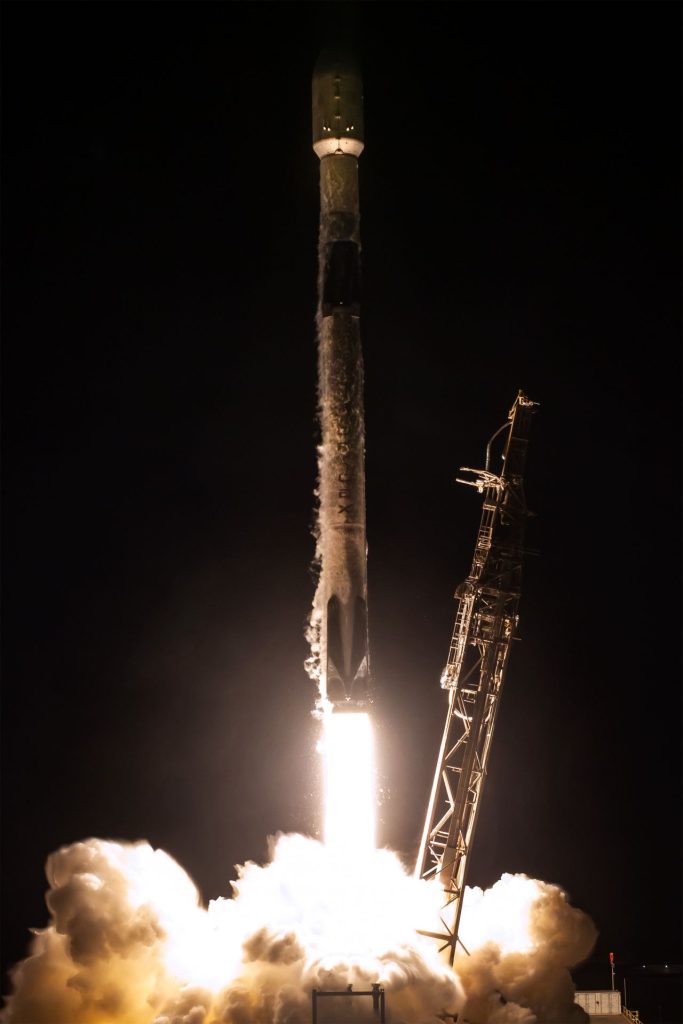
Launch of Transporter 16.
Launch of Transporter 16. Image credit: SpaceX

The European Space Agency (ESA) has supported the launch of two CubeSat missions under its Pioneer Partnership Projects with Spire Global and UK-based AAC Clyde Space, and with co-funding from the UK Space Agency. Spire Global’s SaaS and AAC Clyde Space’s VIREON™ missions share the goal of expanding their commercial offering with in-orbit-demonstrations of new technologies and platforms. SaaS and VIREON™ were launched into low Earth orbit (LEO) onboard SpaceX’s Transporter-16 from Vandenberg Space Force Base, California, at 12:02 pm BST (13:02 PM CET).
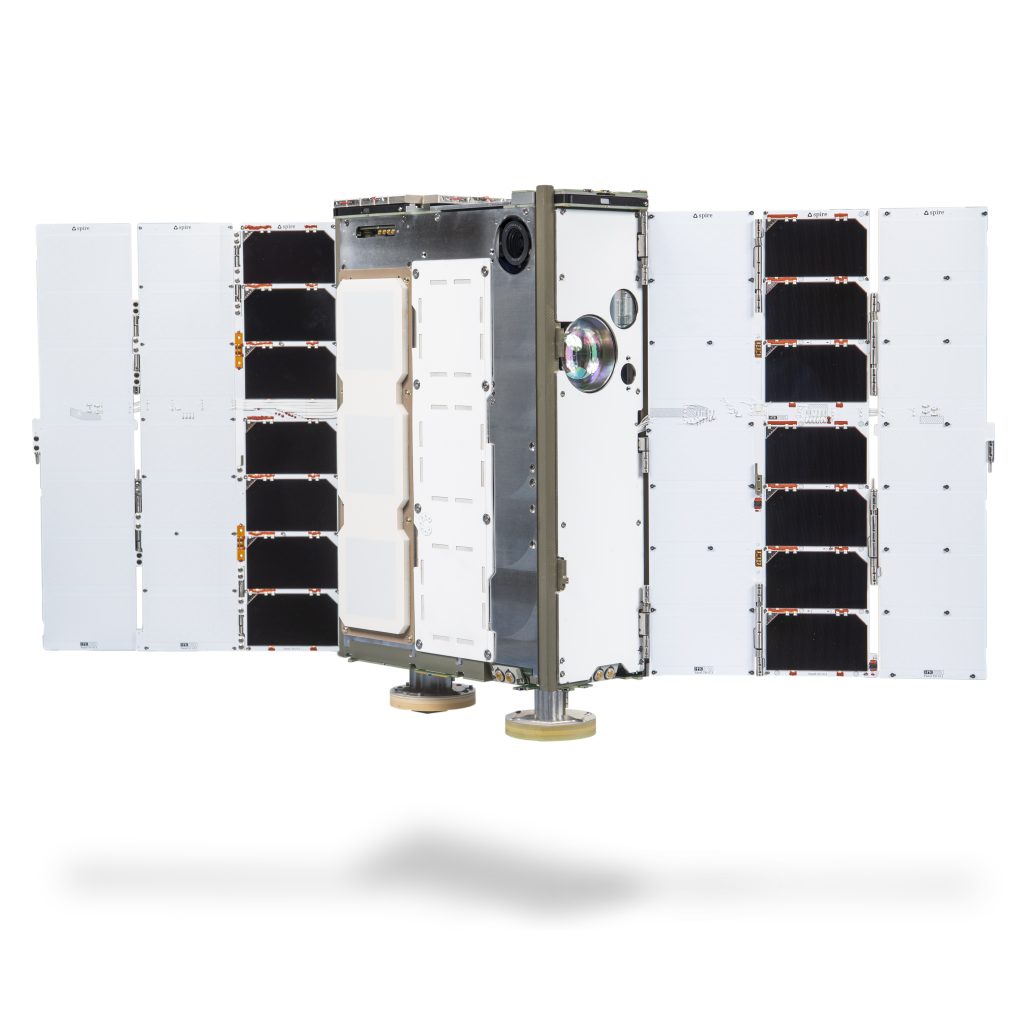
A render of Spire's SaaS satellite
A render of Spire’s SaaS satellite Image credit: Spire Global

As the number of spacecraft in orbit grows, so does the natural bottleneck imposed by the Radio Frequency (RF) spectrum on satellite communications. The limited availability of bandwidth and ground station time, as well as the slower data rates and stringent registration regulations governing the RF spectrum, compound the challenge of scaling satellite fleets. The SaaS Pioneer Project with Spire Global leverages both RF and optical inter-satellite links to enable the company to optimise the transmission of mission-critical data for its customers. The new 6U CubeSat launched for the SaaS mission aims to demonstrate technically-demanding cross-plane optical communications between itself and two other CubeSats already in a different orbit – a critical capability to optimise constellation communications.
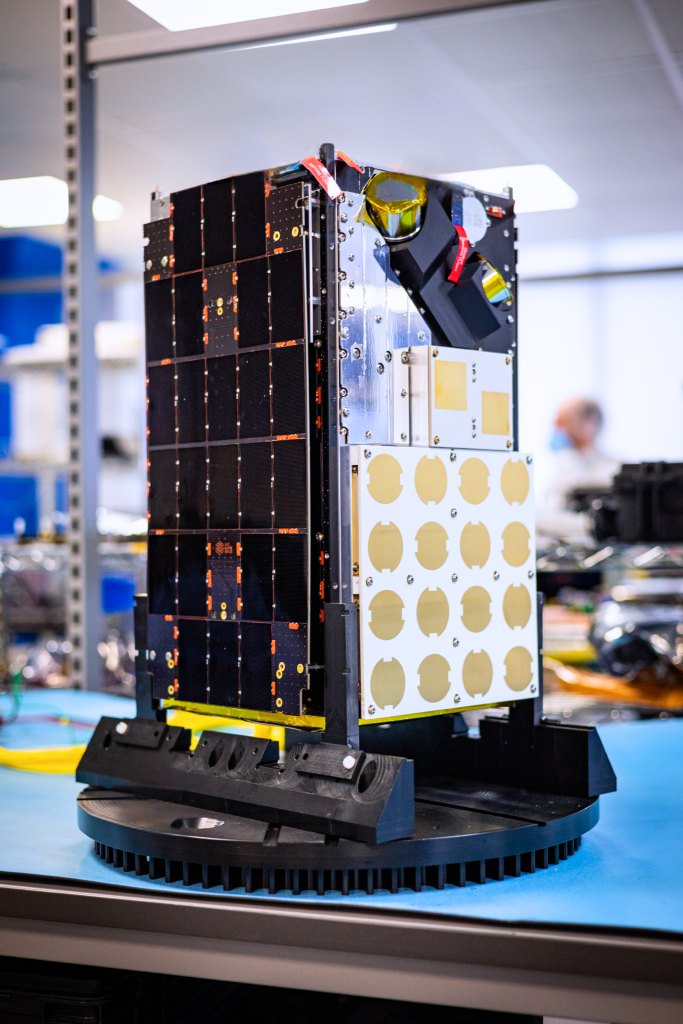
VIREON-1 satellite in a cleanroom
VIREON-1 satellite in a cleanroom. Image credit: AAC Clyde Space

The VIREON™ mission, part of the xSPANCION Pioneer Partnership Project between ESA and AAC Clyde Space, comprises of four 16U CubeSats demonstrating a new mini-constellation capability for Earth Observation data services. The first two of these CubeSats are being launched on Transporter-16, with a further two planned for launch on Transporter-18 later in 2026. The xSPANCION project is so named for its goal to expand the production capabilities for AAC Clyde Space’s existing satellite platforms. What’s more, xSPANCION also supports the development of a larger 16U CubeSat platform offering, with a payload-agnostic design capable of adapting to a variety of mission requirements. The VIREON™ mission will allow AAC Clyde Space to demonstrate its new platform and enable scalable Earth Observation data services under real operating conditions on orbit.

“VIREON™ addresses a clear need in the market for Earth Observation data that can be used operationally and at scale,” says Luis Gomes, CEO of AAC Clyde Space. “The constellation is designed to provide a cost-effective balance of coverage, detail and revisit frequency, enabling practical monitoring of land and natural resources. With this mission, we are expanding our capacity to deliver data services to more customers.”

“This Transporter-16 launch marks an important step forward for the UK’s ambitions in next-generation satellite communications,” said Henny Sands, Head of Telecommunications at the UK Space Agency. “By supporting both breakthrough optical technologies and high-volume production methods, we are enabling British companies to lead in the markets that will define the future of global connectivity.” 
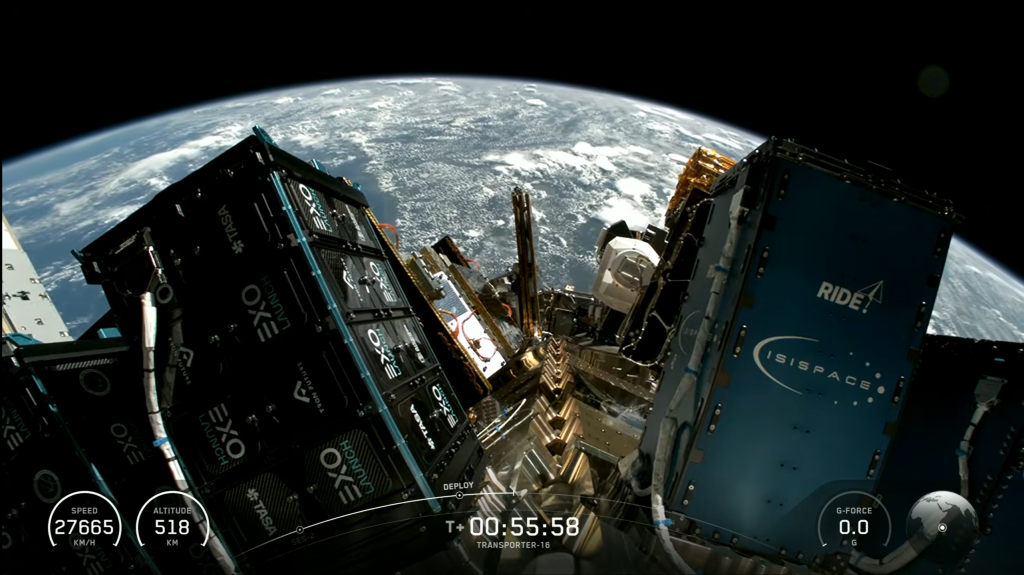
View of the CubeSat deployers on the launch vehicle’s second stage.
View of the CubeSat deployers on the launch vehicle’s second stage. Image credit: SpaceX

Pioneer Partnership Projects are part of ESA’s Advanced Research in Telecommunications Systems (ARTES), the Agency’s flagship telecommunications programme. The Pioneer Partnership Project helps start-ups and emerging space mission providers to validate and demonstrate their services in orbit. Flight heritage is a major indicator of a technology’s reliability and a crucial factor in securing new contracts. Conversely, securing access to space to establish this flight history is a costly and complex endeavour, making this stage pivotal to the commercial success of companies developing new space technologies. For this reason, ESA designed Pioneer to provide financial, programmatic and technical support to new Space Mission Providers, effectively de-risking new technologies and services and lowering the barrier to entry to space.

The three satellites launched on Transporter-16 join 22 spacecraft already launched with ESA’s Pioneer Partnership Projects.
ESA and University of Glasgow demonstrate end-to-end medical visit with satellite-powered remote medicine

Publication date

20 Jan 2026

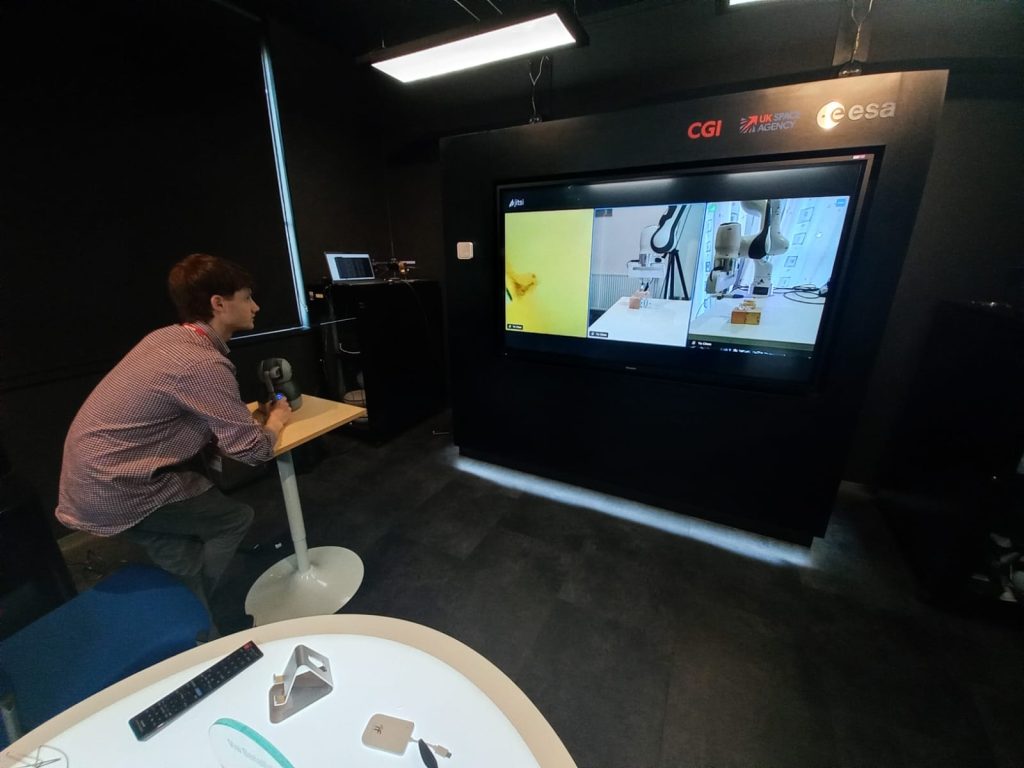
Consulting dentist performing the remote dental inspection from the 5G/6G Hub in ESA’s ECSAT. Image credit: European Space Agency

The European Space Agency (ESA) and the University of Glasgow successfully performed a remote dental inspection over satellite signal using the pop—up 5G network developed by ESA’s 5G REMOTE project. This experiment showcases the benefits of satellite communications for telemedicine – enabling healthcare professionals to engage and even physically interact with patients from hundreds of miles away.

This simulation was conducted in a partnership between ESA Connectivity and Secure Communications, and the Glasgow Next—Generation (GXG) testbed at the University of Glasgow. The experiment was funded under ESA’s Space for 5G/6G & Sustainable Connectivity programme within the Advanced Research in Telecommunications Systems (ARTES) programme, with support from the UK Space Agency.

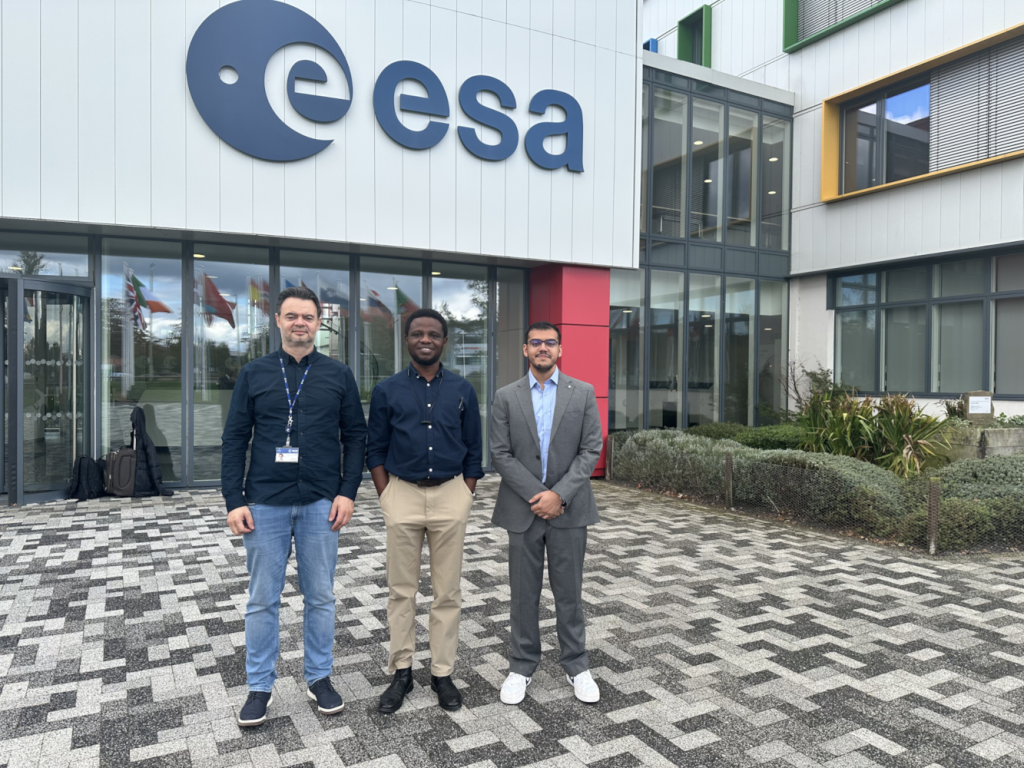
The test team at ESA’s ECSAT in Harwell. Image credit: European Space Agency

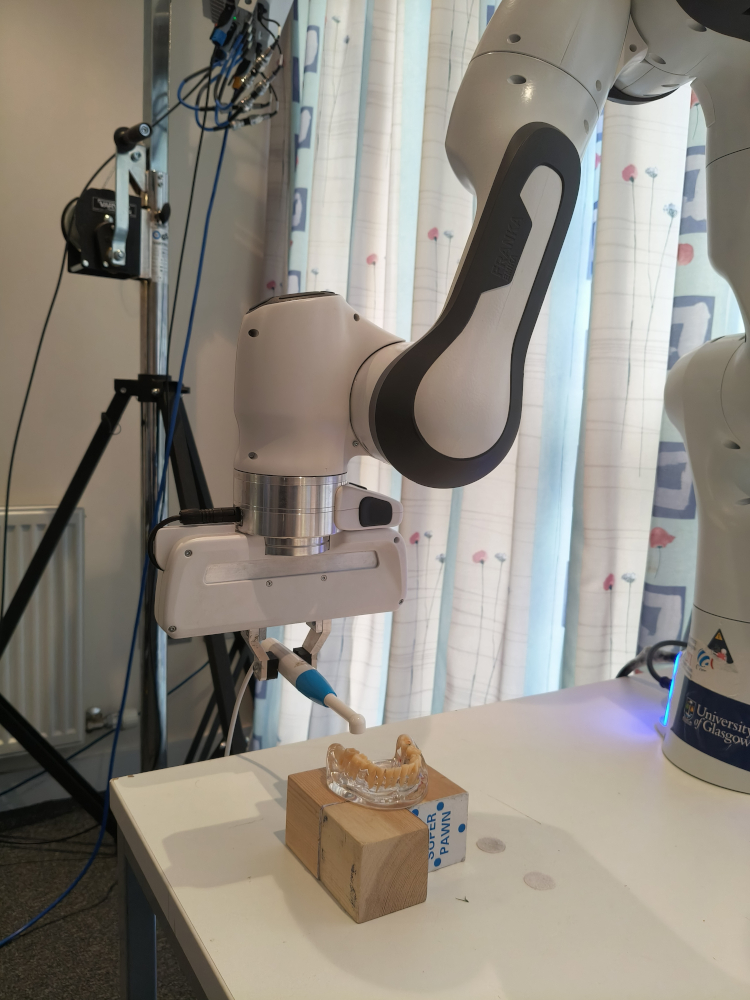
The test demonstrated a complete, end—to—end remote patient experience. The user equipment located in the 5G/6G Hub at ESA’s European Centre for Space Applications and Telecommunications (ECSAT) site at the Harwell Science and Innovation Campus connected through a OneWeb satellite backhaul to the University of Glasgow’s 5G pop—network. This pop—up network enabled the team to connect to a robotic arm located at the University of Glasgow’s Loch Lomond facility, using a 5G edge breakout to optimize user plane traffic. Through this remotely controlled robotic arm, the doctor at ESA ECSAT was able to perform a dental examination of the simulated patient at Loch Lomond. The Space for 5G/6G team then dispatched a drone to deliver medication to the patient, all the while monitoring and tracking its payload over a 5G—enabled Long—Range Wide Area Network (LoRaWAN).

This seamless experience — blending terrestrial and non—terrestrial networks with robotic systems and drones while leveraging edge computing capabilities — highlights the transformative potential of integrated terrestrial and non—terrestrial connectivity for secluded areas. Where terrestrial networks are not economically viable or practical due to geographical or demographic constraints, hybrid 5G and satellite—enabled connectivity can bridge the gap and enable advanced telemedicine services. By integrating terrestrial and non—terrestrial networks, new and faster communications standards being developed by industry will help to enable stable and continuous connections worldwide.

The robotic arm and simulated patient at University of Glasgow’s Loch Lomond facility. Image credit: University of Glasgow

Leveraging the potential of ubiquitous signal coverage afforded by integrated terrestrial and non—terrestrial networks, the 5G REMOTE project combines satellite connectivity with a portable 5G pop—up network that can be rapidly deployed in remote locations where only satellite coverage can reach. This hybrid solution supports critical services, such as telemedicine, by enabling new robotic and unmanned solutions that extend the reach and effectiveness of healthcare providers. For emergency situations, this technology can help provide critical care, even in geographically isolated and otherwise hard—to—reach locations. The technology can also reduce cost by removing transportation from the equation.

“This kind of reliable and flexible connectivity has potentially transformative applications for improving the wellbeing of millions of people,” said Antonio Franchi, Head of ESA’s Space for 5G/6G & Sustainable Connectivity programme. “We are combining satellite communications technology with new advances in mobile signals and robotics to unlock the full power of telemedicine and help to overcome the digital divide.”

 “Access to healthcare should not depend on postcode or proximity to a major hospital. Our team’s work with ESA demonstrates a practical pathway to bring specialist assessment and timely intervention closer to remote and rural communities,” said Professor Muhammad Imran, Head of James Watt School of Engineering at the University of Glasgow. “This was enabled by using integrated 5G and satellite connectivity (terrestrial and non—terrestrial networks) to support real—time interaction, remote examination and delivery of essentials when every minute matters.”

ESA, Telesat and RAL Space successfully demonstrate Q-Band satellite link over low Earth orbit

Publication date

03 Jun 2025

A group of people posing for a photograph
The Telesat and RAL Space team, with Technical Contributor for ESA Antonio Martellucci (right). Image credit: ESA

ESA, Telesat and the Science and Technology Facilities Council’s (STFC) RAL Space have reported a groundbreaking milestone in telecommunications technology, successfully establishing a Q-Band (38-39 GHz) link over LEO, between the RAL Space Chilbolton Observatory and the Telesat LEO 3 demonstration satellite.

The achievement was performed under a Memorandum of Understanding signed in early 2024 between Telesat and ESA, and showcases the newest milestone in the partnership, building on the world-first 5G NTN demonstration in December 2024.  

This project was funded as an ARTES Advanced Technology activity under the Space for 5G/6G and Sustainable Connectivity programme line, supported by the UK Space Agency. The resulting achievement represents a significant leap forward in satellite communication technologies, validating the performance of millimetre-wave Q-Band communications in LEO. 

The team, brought together experts from the ESA Connectivity and Secure Communications, and Technology, Engineering and Quality directorates, and also marked the first mission for ESA Technology’s mobile laboratory van which will support future campaigns, and leveraged expertise from the Technology directorate’s Wave Interaction and Propagation section. 

A Q-Band receiver developed by RAL Space was mounted on Chilbolton Observatory’s large 25m dish, which is normally used as a LEO satellite tracking radar. The team at the observatory used this radar tracking capability to monitor the state of the satellite and its orbit effectively during each pass. The team established a stable link with a collocated Ka-Band uplink antenna to the Telesat LEO 3 satellite, and maintained connectivity from approximately 15° elevation to a maximum of 80°.  The Telesat LEO 3 satellite also provided frequency up-conversion to Q-Band, amplification and retransmission to ground. The Telesat satellite station transmitted a DVBs signal with fixed QPSK ¼ modulation and fixed power, with the ESA modem locked with a margin of up to 13 dB and Es/N0 of up to 10.66 dB. 

In addition, thanks to a Software Defined Radio (SDR) available at the receiver, the RAL scientists and engineers collected critical wave propagation data for the entire satellite visibility periods. This allows us to evaluate the characteristics of atmospheric Q-Band propagation channel,. including in-excess attenuation, total attenuation and its components, scintillation and Doppler effect. Such propagation experiments are carried out in collaboration with Joanneum Research, Austria, for their experience with LEO measurements gained in the ESA ARTES W-Cube project. 

By studying Q-band and higher frequency communications, ESA is driving a fundamental shift in how satellite communication systems are conceived. This follows on from the legacy of Alphasat TDP5 and the Aldo Paraboni experiment, where ESA and a Thales Alenia Space-led Italian consortium, conducted a similar technological demonstration in geostationary (GEO) orbit. As the satellite communications market moves further into leveraging LEO capabilities, this latest demonstration showcases ESA’s commitment to driving European industry capabilities in an increasingly competitive global market. 

Demonstrations like this support a potential, more intensive use of Q-Band by LEO constellations, which, in turn, brings several critical advantages such as considerably smaller antennas, making it particularly attractive for aerial and land-mobile satellite communications. The Q-Band over LEO is also attractive for aerial (drone/HAPS) relay backhaul using the 5G New Radio (NR) standard, which is a novel approach for 5G networks. Additionally, Q-Band may be an attractive option for downlinking LEO traffic to gateways, freeing up Ku- and Ka-Band spectrum for additional user traffic. 

The most significant implication is the potential for consumers and business to access a much wider frequency spectrum. Satellite and terrestrial networks convergence is unlocking new innovations which will help connect communities, support emergency response systems, and enabling new possibilities for 5G and future 6G communications across the economy and society. 

Fabrizio De Paolis, ESA’s 5G/6G Implementation Manager, said: “We’re proud to be building truly world-leading connectivity capabilities in Europe and Canada, demonstrations like this showcase how ESA is working hand-in-hand with our industry partners. driving our competitiveness on the global scale.” 

Antonio Franchi, ESA’s Head of Space for 5G/6G and Sustainable Connectivity programme line, said: “We are proud to see our collaboration with Telesat – and now RAL Space – continue to grow, unlocking new opportunities through higher frequency communications. This latest demonstration, supported by the dedicated teams from ESA, is a key step toward enabling new 5G and 6G NTN capabilities. It highlights how our Member States are driving innovation to meet both market needs and societal challenges. Congratulations once again to the entire team!” 

Alberto Ginesi, Head of the Telecom Systems and Techniques Section of the Directorate of Technology, Engineering, and Quality, said: “The quest for higher frequency has always been at the centre of ESA R&D investigations over the last half century. This achievement represents yet another important milestone in that direction and reaffirms the role that the Agency wants to play in helping its member/supporting state industry in exploring innovative systems and technologies.” 

Antonio Martellucci, propagation engineer and Nicolas Floury Head of Wave Interaction and Propagation Directorate of Technology, Engineering, and Quality, said, “The experimental assessment of the satellite radio channel and atmospheric propagation effects at high frequencies is an essential step for the design and operation of efficient and reliable satellite services and provides the foundation for radio regulatory studies. This is made possible by the commitment to develop propagation instruments and experimental techniques in ESA programmes.” 

Mario Neri, Telesat’s Director of Spectrum Strategy, Innovation and Space Sustainability said “Telesat applauds this cooperation with ESA and RAL space. Telesat has been continuously innovating to meet the connectivity demands of the future, and the data collected from this demonstration is invaluable as we consider higher frequency bands for future expansion of the Telesat Lightspeed LEO constellation. I’d personally like to recognise and thank Telesat’s engineering professionals who supported this programme.” 

Dr Emal Rumi, Principal Research and Development Engineer at STFC RAL Space said: “We’re witnessing a shift in satellite communications as many operators move from targeting distant geostationary orbits only to increasingly including low earth orbits. This Q-band breakthrough addresses two crucial challenges – the increasing demand for high-speed data, and the rapid growth of LEO telecommunication satellites. Chilbolton Observatory has been driving telecommunication research since the 1980s, and this milestone demonstrates that our expertise in RF design and signal propagation studies is just as relevant today to support partners delivering new research, technologies, and services.”

ESA and RBC Signals UK kick off STORM project for dynamic satellite spectrum management

Publication date

27 May 2025

The European Space Agency (ESA) and RBC Signals UK have signed a contract to develop the Spectrum Trade Orchestration and Resource Management (STORM) platform, an innovative solution designed to transform static spectrum allocations into a dynamic commercial marketplace.

Developed under the ESA Advanced Research in Telecommunications Systems’ (ARTES) Competitiveness & Growth programme, STORM will leverage software-defined radios (SDR) to use spectrum resources more efficiently through a commercial marketplace. The platform aims to make satellite communications more accessible and cost-effective by optimising the management and allocation of radio frequency (RF) resource, benefitting a wide range of users from SMEs to international industry and governments.

The 18-month project will be led by RBC Signals UK, working alongside partners Texuna and Dione Consulting. This collaboration brings together expertise in software development, satellite communications, and regulatory compliance.

STORM will enable spectrum management, trading, efficiency and wider interoperability, between different operators and hardware parts (eg SDR, modulators, UT’s etc); giving organisations a platform to become more agile and responsive in market or business changes. STORM will progress through definition, technology, product, and demonstration phases, with commercial deployment targeted for mid-2026.

This project builds on ESA efforts, recently signing a joint statement with the International Telecommunication Union (ITU) to foster a more sustainable and responsible use of radio spectrum resources for satellite systems, as well as the Clean Spectrum Driving Innovation and Growth conference hosted at ESA HQ in Paris which brought together key stakeholders to drive economic innovation and growth through clean spectrum.

“ESA is proud to be supporting such a project that will help improve spectrum management and trading. STORM presents a step forward in supporting a more accessible, efficient, and competitive satellite communications sector” said Jerome Colinas, Telecommunications System Engineer within ESA’s Connectivity and Secure Communications directorate.

 “We are excited about project STORM and the support we are receiving from ESA & the UK Space Agency. We believe there is a large amount of underutilised spectrum and that this program will provide a market clearing mechanism enabling innovative new solutions such as satellite IoT to come to market.” said Ron Faith, CEO at RBC Signals UK.

“STORM not only opens the space industry for Texuna following 2 years of collaboration with our partners, but more importantly STORM paves the way for many other innovators to get simplified commercial access to satellite spectrum on an ad hoc basis.” said Patrick Lynch, CEO at Texuna.

“STORM is the foundation stone for the global spectrum reuse enhancement. It redefines the spectrum efficiency, unblocking the market and allowing innovative ideas and services to grow,” said Vasileios Tsiafakis, Project Director of STORM.

ESA, GeoVille and Eutelsat OneWeb to deliver connectivity to distribute Earth observation data across Africa

Publication date

26 May 2025

A new collaboration between GeoVille and Eutelsat OneWeb, facilitated through the European Space Agency’s (ESA) Sunrise Partnership Project, is set to transform how Earth observation data reaches the world’s most remote regions. The “OneWeb Copernicus Data Hubs” project, which was recently signed under ESA’s partnership with Eutelsat group and with support from the Austrian Space Agency, will focus on delivering Earth observation data to end users in Africa.

The OneWeb Copernicus Data Hubs specifically target the access to data in connectivity-challenged regions. By integrating Eutelsat OneWeb’s satellite internet constellation with the Copernicus ecosystem, the service ensures high-bandwidth internet access and reliable dissemination of environmental and situational data to previously underserved areas, leveraging OneWeb’s global coverage.

At the heart of this service are the Copernicus OneWeb Data-Bridges – compact hubs equipped with Eutelsat OneWeb User Terminals and specialised processing units that manage data streams and storage in remote locations. These systems are equipped with user-friendly software for configuring and selecting specific data for local archive across all geographic areas, regardless of terrestrial infrastructure limitations.

The partnership leverages GeoVille’s EarthStreamer technology, an innovative high-efficiency streaming and compression solution that enables large volumes of satellite and climate data to be transmitted even in low-bandwidth environments. This technological breakthrough ensures uninterrupted access to critical Earth observation insights around the globe.

Additionally, the service incorporates the European Copernicus Emergency Management Service, directly streaming emergency management data to remote regions and significantly enhancing resilient response capabilities during natural disasters and other critical situations. The project will deliver actionable information for emergency response decision makers and first responders, Copernicus scientists & researchers working in remote areas, governmental organisations working in remote regions and the European Commission’s Directorate-General for International Partnerships.

The Copernicus-Connect feature of this service enables third-party European Copernicus downstream service providers to extend their reach to previously inaccessible locations.

The technical workflow involves compression and conversion of daily Copernicus data into efficient data streams, which are then transmitted via the Eutelsat OneWeb Broadband Service. This expansion creates new market opportunities for Europe’s Earth observation industry while delivering valuable environmental insights to communities worldwide.

This project showcases the growing partnership between ESA’s Connectivity and Secure Communications directorate and GeoVille. In 2024, GeoVille were selected to lead an industrial consortium on a project called Smart-Connect, as part of CSC’s Civil Security from Space programme.

Carsten Tobehn, Sunrise Project Manager in ESA’s Connectivity and Secure Communications, said, “Through our Sunrise Partnership Project, ESA creates a framework where industry leaders like GeoVille and Eutelsat OneWeb can combine their expertise and foster growth in joint Telecommunications and Earth Observation space applications. By de-risking these innovative developments, we enable European companies to deliver solutions that address global challenges while strengthening Europe’s industrial capabilities. This project perfectly demonstrates how our partnership approach enables European space technologies and services to deliver tangible benefits across the globe.”

Guillaume Scottez, Senior Director, Innovation for Eutelsat said, “Eutelsat Group is pleased to work with GeoVille and ESA within the Sunrise Partnership Project to enable the seamless transmission of Copernicus vital environmental data, directly supporting enhanced environmental monitoring and emergency response in remote and rural regions. Through this partnership, we are leveraging the global broadband connectivity provided by our OneWeb constellation to benefit both environmental stewardship and the expansion of Europe’s Earth Observation industry to remote areas.”

Wolfgang Kapferer, Head of Space and Security, GeoVille, states, “We are proud to contribute to the pioneering Sunrise Partnership Project in collaboration with ESA and Eutelsat Group. At the heart of this initiative is the dual-use potential – serving scientific communities, civil security operations and governmental administration. Our Copernicus Data Hubs service is helping to build a new ecosystem for delivering vital insights via satellite communications, ensuring timely and reliable data access. Leveraging our advanced EarthStreamer technology, we enable efficient compression and streaming of high-quality satellite data from the Copernicus programme and the private sector, even over Satcom and in low-bandwidth environments. This transformative capability is making a real difference in how critical information reaches those who need it most, especially in remote and underserved regions.”