

LATEST NEWS
May 18, 2026 • 08:20
May 4, 2026 • 08:05
April 30, 2026 • 09:01
EVENTS
January 25, 2022
31 Mar 2026

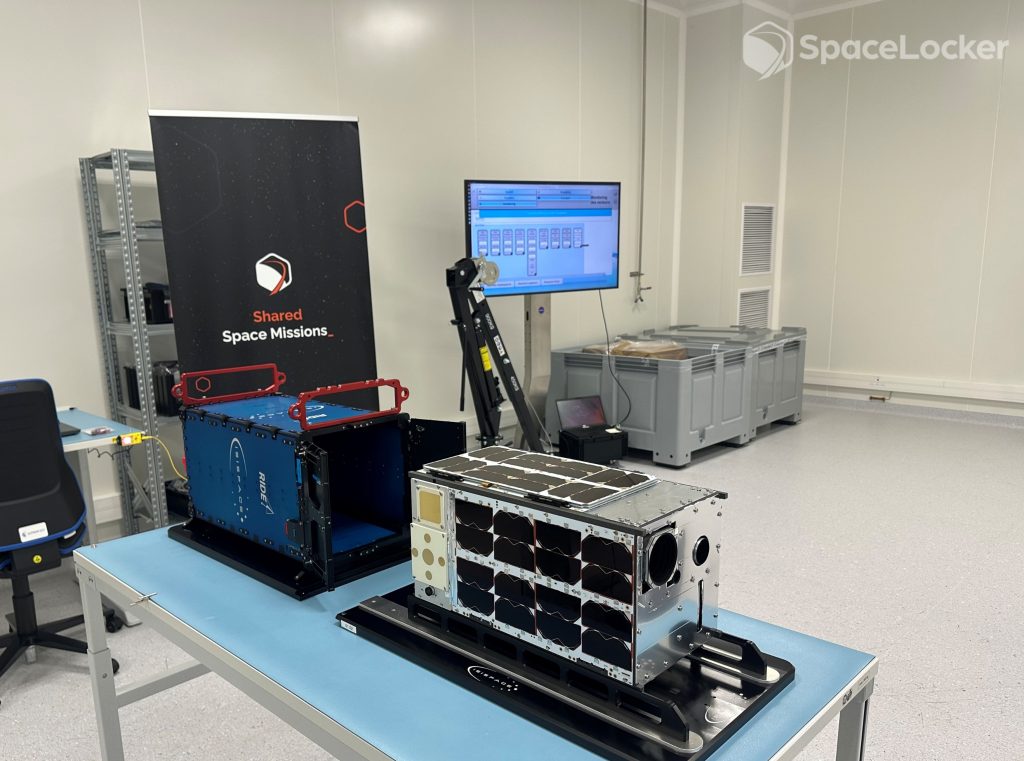
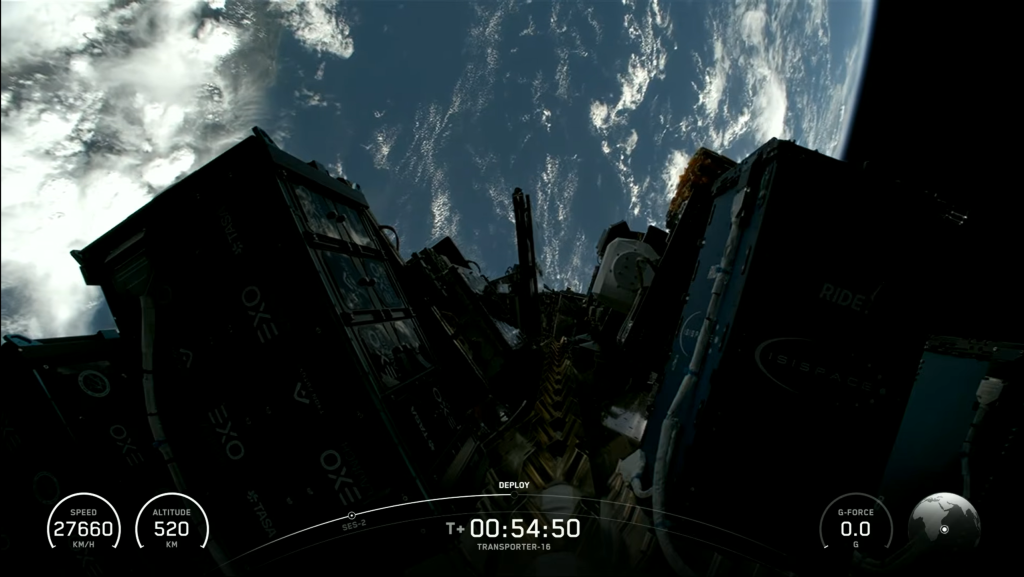
The European Space Agency (ESA) has supported the launch of Belgian in-orbit computing start-up EDGX’s STERNA AI-powered on-board data processing unit. STERNA will conduct in-orbit experiments as a hosted payload on a 16U satellite mission. The satellite containing EDGX’s STERNA was launched onboard SpaceX’s Transporter 16 rideshare mission from Vandenberg Space Force Base to a sun-synchronous orbit on 31 March at 12:02 pm BST (13:02 PM CET).
The EDGX STERNA mission marks the company’s first launch into space, with support from ESA’s Industrial Competitiveness programme line, a component of the Agency’s Advanced Research in Telecommunications Systems (ARTES) programme.
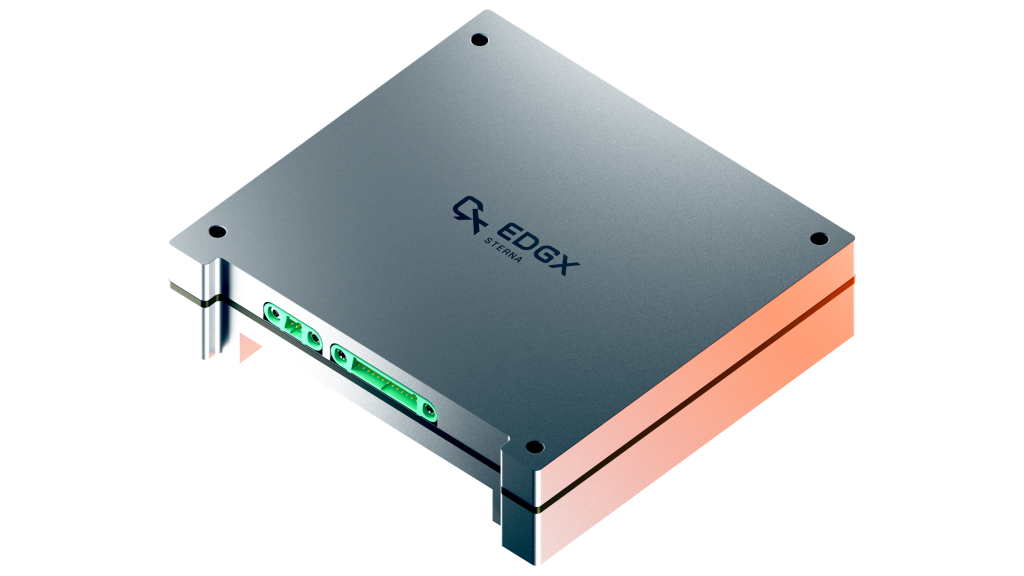
The experimental mission will benchmark the performance and power consumption of the STERNA onboard data processing unit across multiple computationally intensive applications. A key test case for the STERNA data process unit will be the detection of communication signal interference, to identify and locate sources of Radio Frequency (RF) spectrum interference.
In the longer term, EDGX aims to offer in-orbit computing as a service, enabling customers to access scalable processing power in space without the need to deploy their own systems.
STERNA is a milestone towards EDGX’s goal of developing a generic commercial solution for power-efficient, data processing. The degree of processing power afforded by the combination of powerful commercial GPUs with advanced AI acceleration has yet to be deployed on spacecraft due to spaceflight’s stringent operating requirements and hazardous environment: higher processing capabilities draw more power from satellites, which are typically energy-constrained to what their solar panels can yield. Furthermore, the rigors of spaceflight expose components to intense radiation, vibrations, as well thermal and mechanical stress.
This has traditionally led satellites to use task-specific, simplified computers, reducing points of failure and sacrificing processing capabilities for reliability. However, with increasingly data-intensive applications being deployed across growing satellite constellations, the communication between the satellite and the ground has become a mission bottleneck limiting the speed, reliability and security of transmissions.
EDGX’s solution is an AI-powered data processing unit that is directly integrated onboard satellites. Satellites generate large volumes of raw data that are often difficult to process using traditional approaches, placing significant strain on downlink capacity and ground-based processing systems.
By enabling advanced data processing directly in orbit, the EDGX STERNA unit can analyse and extract relevant information in real time, reducing the need to transmit large volumes of unprocessed data to Earth. This significantly optimises bandwidth usage and improves the speed and efficiency of satellite operations.
“Onboard computing is crucial to many of the future applications we are working on at ESA,” said Domenico Mignolo, Head of Technology and Products Division at ESA. “EDGX’s novel solution and fast-paced approach takes advantage of the full European value chain and shows how quickly we can send brand new innovations into orbit.”
“With support from the European Space Agency, EDGX took a computing concept from idea to launch in under two years,” said Wouter Benoot, Co-Founder & CTO at EDGX. “Our work demonstrates how startups can effectively collaborate with ESA in a fast-paced environment, pushing the European innovation mindset.”
With support from ESA’s ARTES 4.0 Industrial Competitiveness, the Belgian company leverages the NewSpace model to rapidly test cutting-edge technology: EDGX uses an off-the-shelf AI chip to circumvent the traditionally lengthy and costly development cycle involved in making innovations space-worthy. By launching the first generation of their onboard data processing unit directly into space as a payload hosted alongside other experiments on a single satellite, EDGX will be able to collect invaluable performance data whilst demonstrating problem-solving for a variety of applications in real operating conditions. This approach will help the company accelerate its technology development as well as its time-to-market.