

PAGE CONTENTS
Objectives
The opportunity addressed under this activity is the offering of a powerful and in-orbit reprogrammable On-Board Signal Processing (OBSP) platform with reduced accommodation burden and moderate economic costs. It will allow communications services in LEO to energy-limited microsatellites.
Challenges
The key challenge of the project is demonstrating the robustness of the Data Relay Modem in the LEO space environment. To reach this goal, a set of qualification tests are executed on the Engineering Qualification Model.
System Architecture
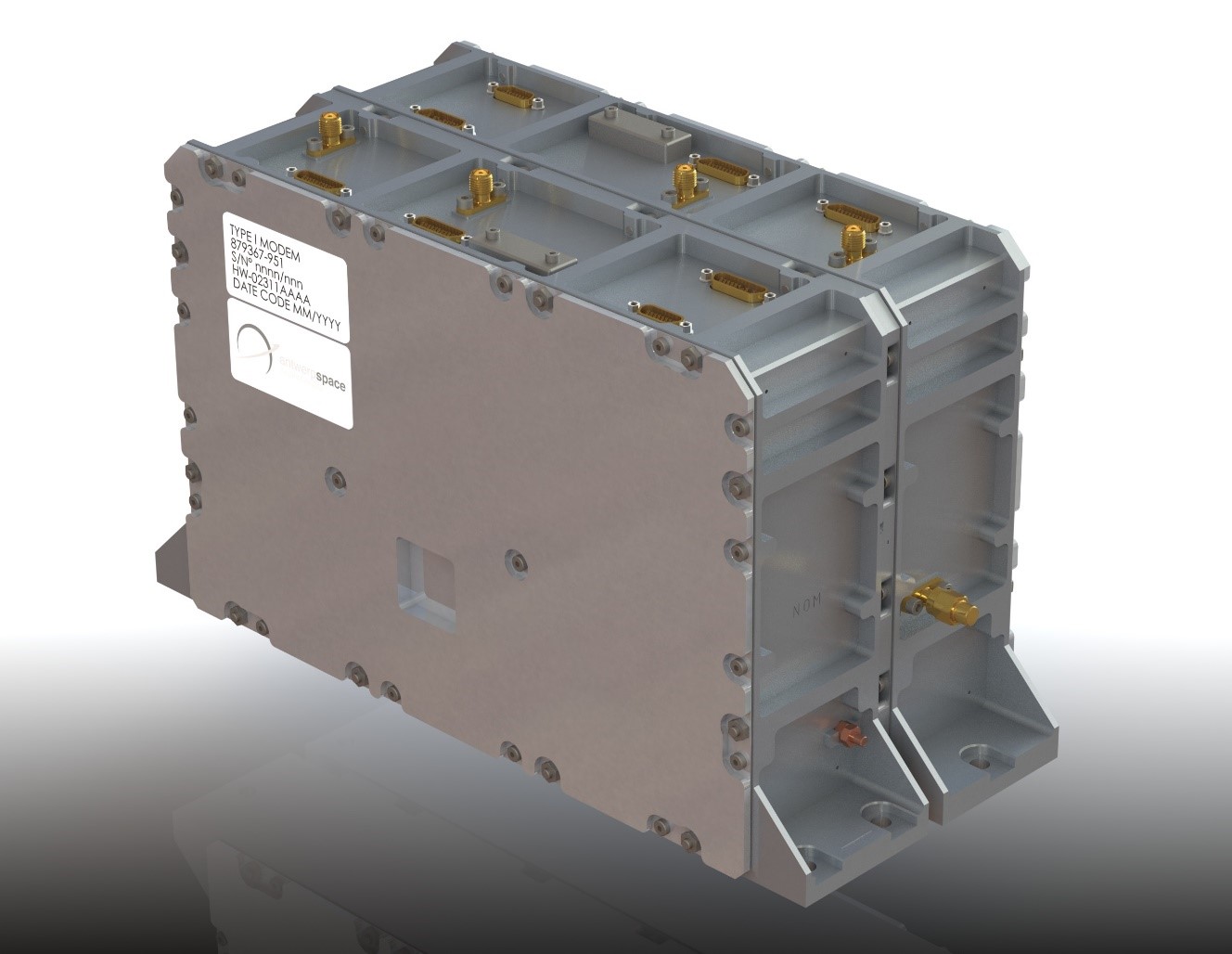
The equipment is designed to be powered from a 28V bus with a maximum power consumption of 35W. For a cold redundant unit the mass budget is 3.6 kg, and the volume budget is 3.8 l.
The equipment is divided into primary power supply conditioning done in the PSU board, RF signal processing functions and digital processing functions.
Plan
The activity subject of this Artes 3/4 contract fits within the broader scope of the overall development program called ‘ARGO’. The three components of this program overlap with some mutual interaction.
The overall ARGO project development process adheres to the recommended life cycle for a Space product development, wherein:
- ARTES 5.2 On-board Signal Processing (this project) maps onto Phases 0/A & B (ARGO SRR & PDR milestones)
- ARTES 3/4 LEO Data Relay Modem project maps onto Phase C to CDR milestone and the non-recurring steps of Phase D to QR milestone.
- Ka-UST Modem project corresponds to the supply steps of Phase D to produce PFM to AR milestone. The market entry for the LEO Data Relay Modem is achieved through supply to MDA, who will use the Modem as a key element within a Ka-band communication equipment for the ESA Col-Ka program enabling high-speed internet access on-board the ISS Columbus module through a data relay link with EDRS.
Current Status
The objectives of the Artes 3/4 contract to develop and qualify a LEO Data Relay Modem have been successfully achieved.
