


ESA-supported Lacuna Space satellites launched to validate fifth generation gateways for direct-to-device (D2D) Internet of Things network
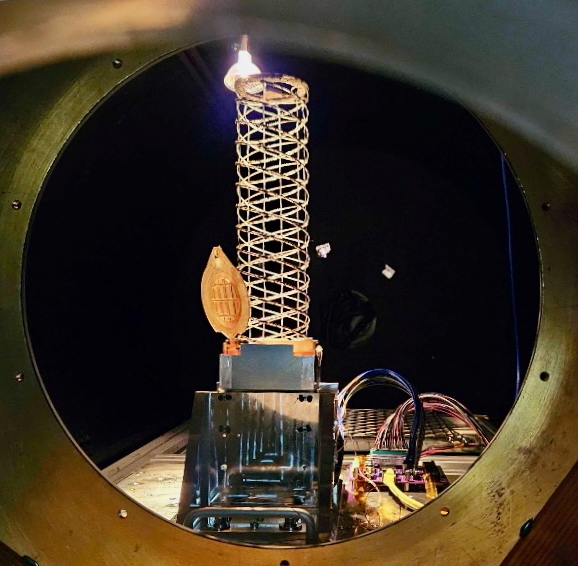
The four satellites join a constellation designed to validate next-gen direct-to-device connectivity from orbit under an activity directed by the European Space Agency’s Advanced Research in Telecommunications Systems (ARTES) Core Competitiveness programme line.
Four new satellites have been launched featuring the fifth-generation satellite gateways developed by Lacuna Space, with support from the European Space Agency (ESA) Connectivity and Secure Communications directorate. The satellites were launched into orbit as part of a mission to advance direct-to-device satellite connectivity. The gateway payloads have an IoT message throughput capacity twenty times greater than previous gateways – a key feature for their commercial viability.
Named Wisdom of the Trail, this mission is composed of four satellites that will join an existing constellation already in orbit. Each satellite in this mission is equipped with the new generation IoT gateway that is designed to provide signal coverage for low-power sensors in remote areas, where ground-based telecom and power infrastructure are non-existent.
The development goal of this technology is to increase the gateway’s throughput capacity in order to lower the cost of service for operators and enable satellite IoT to play a larger role in addressing global challenges.
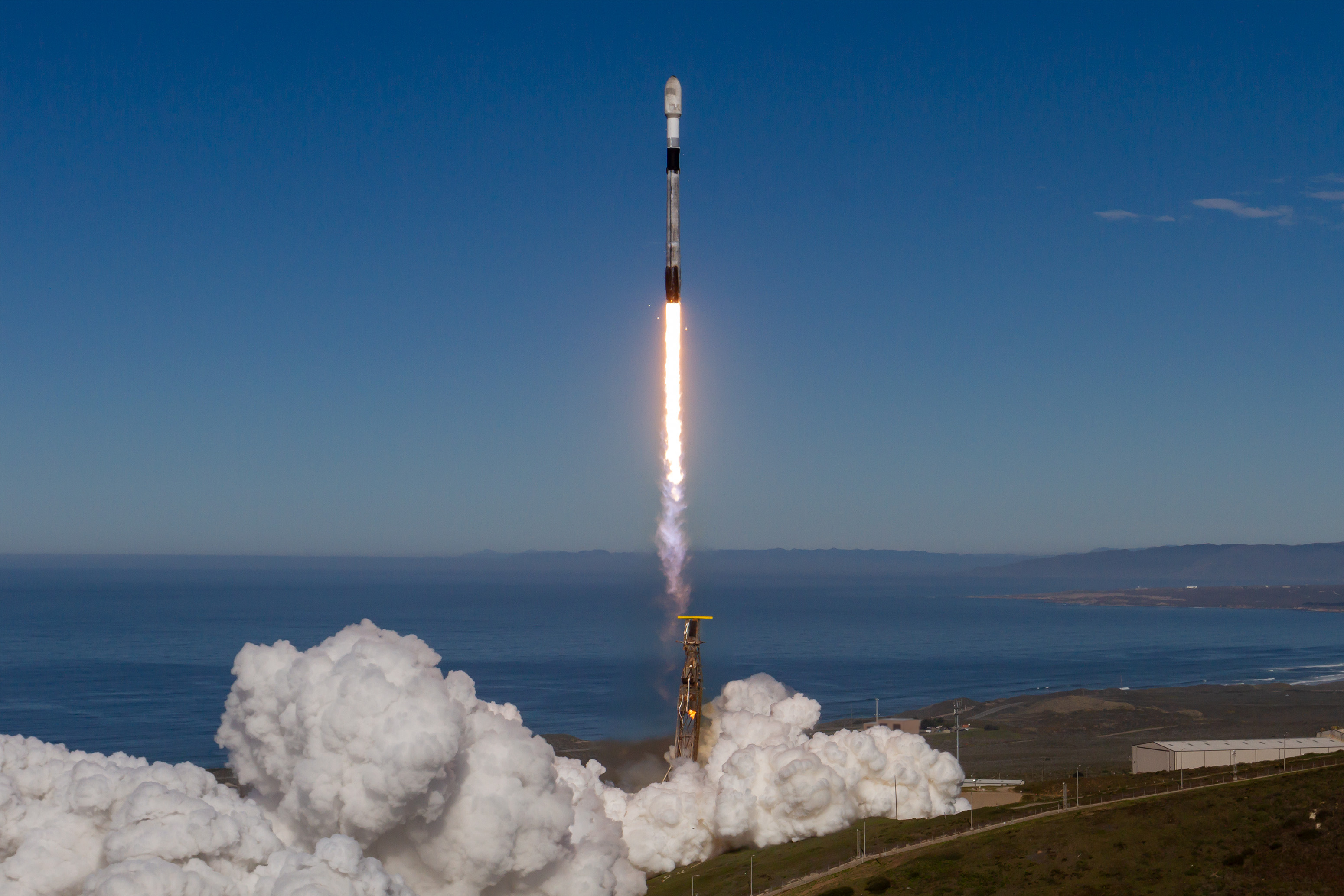
Wisdom of the Trail was launched from Vandenberg Space Force Base in California, US, on a rideshare mission aboard a SpaceX Falcon 9 on 28 November 2025 at 19:44 am CET (10:44 pm PT). Supported under ARTES' Core Competitiveness general programme line, Wisdom of the Trail is part of a multi-mission “Internet of Things Constellation (IoT) pre-cursor demonstration” activity, joining two satellites previously launched into orbit earlier this year.
Lacuna Space was founded in 2016 under ESA’s Business Incubator Centre at the agency’s ECSAT site in Harwell with backing from the UK Space Agency. In 2020, the company successfully entered ESA Connectivity and Secure Communications’ ARTES programme by completing its first satellite and proof of concept. Working closely with ARTES, Lacuna Space developed its technology into fully-fledged in-orbit demonstration within five years. With Wisdom of the Trail, Lacuna Space now counts no less than 15 satellites in orbit to refine their IoT solution.
To date, IoT applications have faced the same challenges as mobile telephony: terrestrial communication infrastructure does not provide sufficiently complete global coverage. Low-cost in-orbit infrastructure can ensure global satellite connectivity, even in sparsely populated areas where building terrestrial network would be impossible or not economically viable. Lacuna Space’s solution will enable IoT applications in these remote locations by allowing satellites to receive short messages from commercially available sensors - such as temperature and pressure gauges - in a direct-to-device link.
The IoT gateway technology onboard the Wisdom of the Trail satellites is built on technology first tested on high-altitude balloon experiments. Lacuna Space developed this technology to enable reliable satellite connectivity with low-cost and low-power requirements. With these new satellites, Wisdom of the Trail will pave the way for the wider deployment of Lacuna Space’s IoT gateway on partner satellites. Each satellite bearing this payload will expand and benefit from shared IoT coverage whilst strengthening the Lacuna Network.
“Direct-to-device technologies are crucial to bridging the digital divide,” said Domenico Mignolo, Head of Technology and Products Division at ESA Connectivity and Secure Communications. “By working with industry, we are able to foster an ecosystem of space technologies that will bring life-changing solutions where terrestrial systems simply can’t reach.”
“When we started Lacuna, people told us the idea of tiny IoT sensors talking directly to satellites was impossible,” said Rob Spurrett, CEO and co-founder of Lacuna Space. “Today, direct-to-device connectivity has become one of the most dynamic areas of the satellite industry. We’re proud that our early work helped lay the foundations for what’s now a global movement.”
This approach reflects the collaborative, ecosystem-driven approach that underpins Lacuna Space’s technological development. By partnering with emerging UK spacecraft suppliers, Lacuna Space has been able to focus on developing these advanced payloads while leveraging the maturing NewSpace ecosystem to accelerate time to market.
With the deployment of these fifth-generation gateways, Lacuna Space marks a step forward in scaling direct-to-device IoT and setting the stage for a new era of efficient, low-cost global connectivity.