


PHASMA and MICE-1 missions supported by ESA launched to expand Greece’s foothold in low Earth orbit
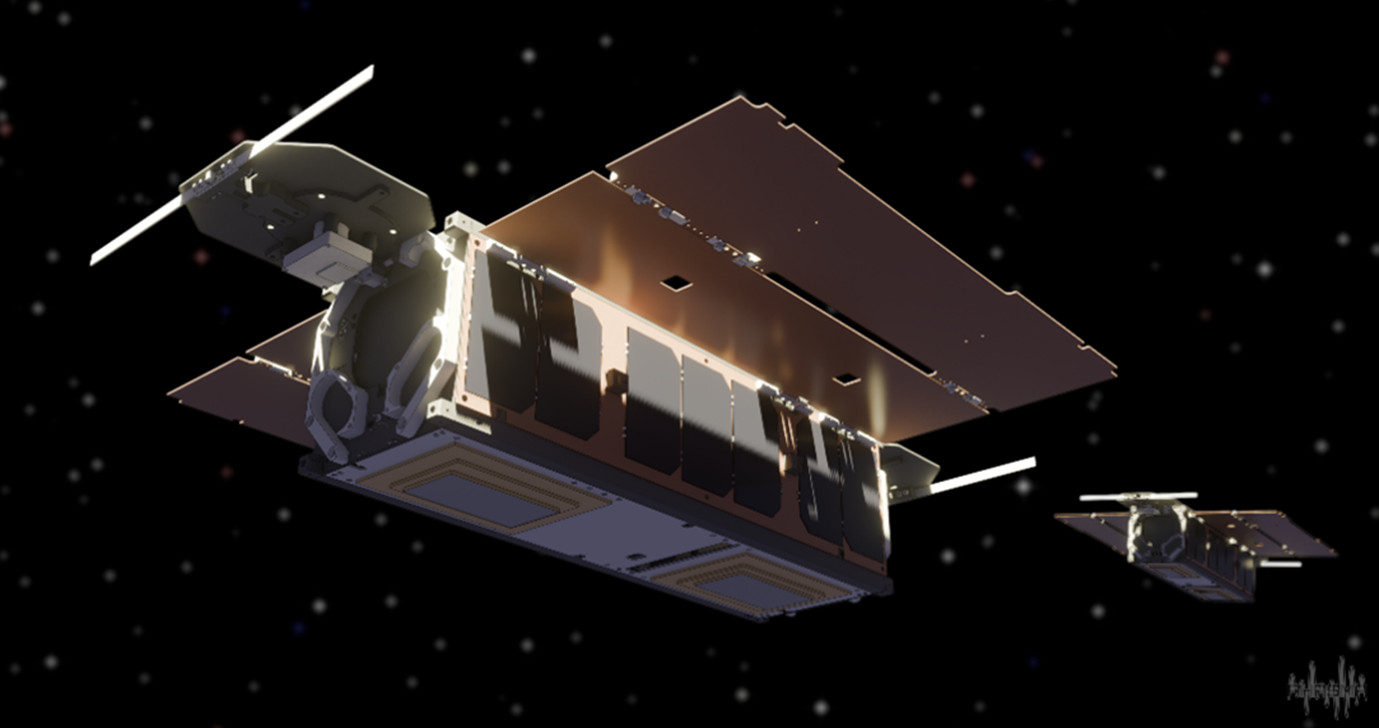
The Greek missions are part of a wave of CubeSats developed in collaboration between the European Space Agency, the European Union and the Greek government to advance the country’s technological independence in the space sector with Secure Connectivity, Earth observation and Space Situational Awareness capabilities.
On 28 November 2025 at 19:44 am CET (10:44 pm PT), the PHASMA mission, Greece’s first satellite constellation operated by Libre Space Foundation, and MICE-1, an IoT in orbit demonstrator operated by Prisma Electronics, were launched and deployed into Sun Synchronous Orbit. The CubeSats are built in a collaboration between the Greek National Small Satellite Programme, the European Space Agency (ESA) and the European Union.
The PHASMA mission operated by LSF comprises of two compact satellites in the 3U CubeSat form factor, named LAMARR and DIRAC, flying in close formation in low Earth orbit (LEO). The satellites represent Greece’s first satellite constellation, intended to advance European and Greek Space Situational Awareness (SSA).
As they orbit, the PHASMA satellites will monitor RF spectrum activity in the UHF and S-bands and send these measurements down to ground stations. Using LAMARR and DIRAC’s relative positioning and transmission delay, operators will be able to determine the location of the signals detected by the satellites, whether they are on the ground or in orbit. With this information, the Libre Space Foundation team will be able to quantify global spectrum usage and identify potential sources of interference or violations. PHASMA is built around an open-source philosophy, down to the payloads’ software-defined transceiver, which follows the Satellite Networked Open Ground Station (SatNOGS) architecture. The SatNOGS-COMMS transceiver was developed in Greece by LSF with support from ESA’s General Support Technology Programme (GSTP).
The Maritime Identification and Communication system-1 (MICE-1), is a 3U satellite built and operated by Prisma Electronics to enhance maritime tracking activities in the Mediterranean Sea with more ubiquitous and reliable connectivity. Using its onboard antenna and receiver to track the Automated Identification System (AIS) signal broadcast by seafaring vessels, MICE-1 will be able expand ship tracking into remote areas, complementing ground based solutions. In addition to AIS signal tracking, PRISMA Electronics’ proprietary LAROS system transceiver placed onboard ships and critical maritime assets will help securely monitor the crafts’ health, engine performance, fuel consumption, and route efficiency. With this data insight into key sensors, instruments and command and control subsystems, LAROS enables gains in safety, sustainability as well as operating costs.
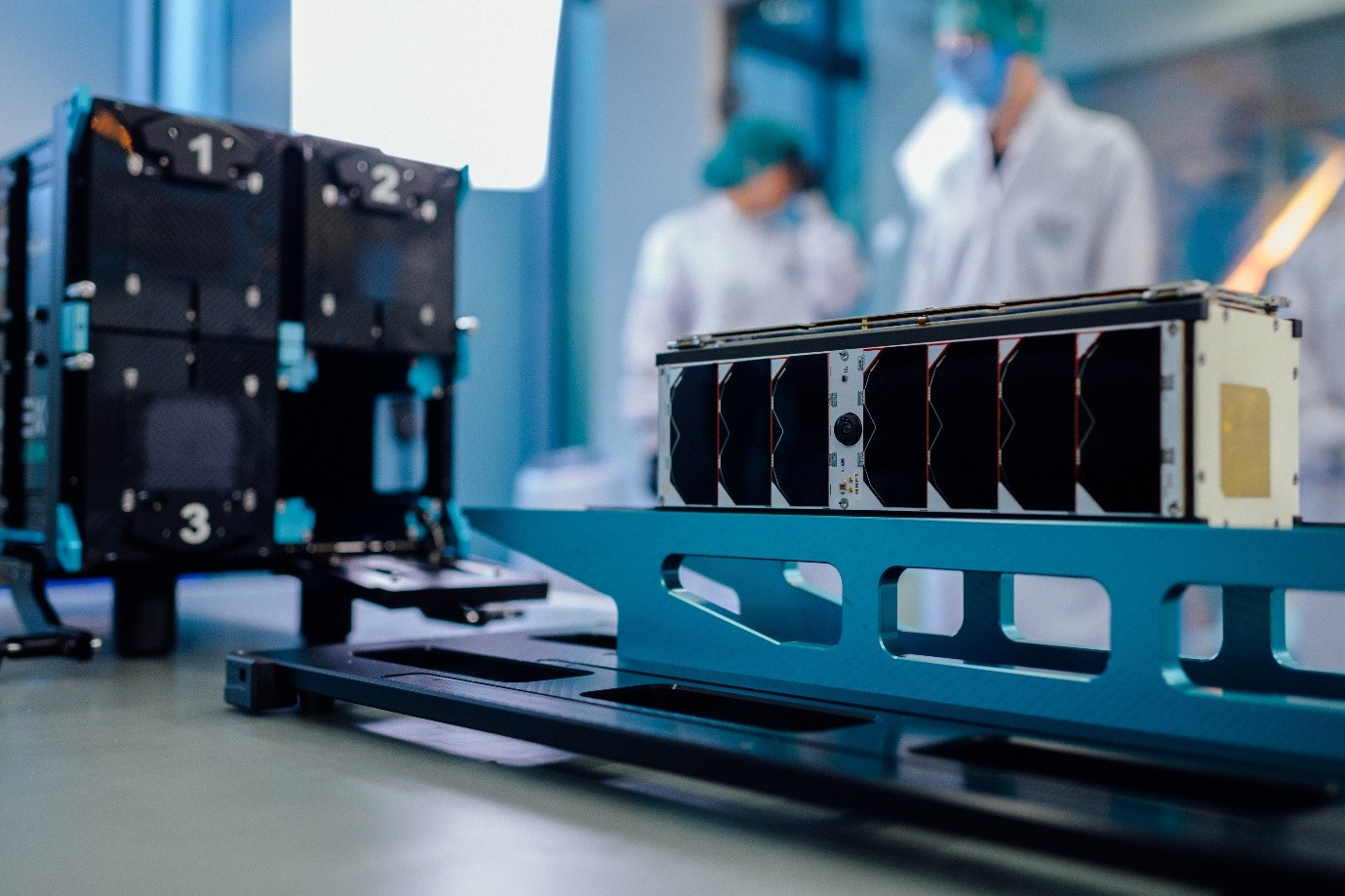
PHASMA and MICE-1 have entered their Launch and Early Operations phase during which mission-critical systems are commissioned. Notably, the solar panels and antenna must be deployed to establish normal operations before the satellites’ payloads can be activated.
“Both PHASMA satellites have successfully launched into orbit, marking a significant milestone for the PHASMA mission. The Commissioning phase is about to begin, demonstrating advanced space science and small satellite innovation." said Andreas Ampatzoglou, project manager of the PHASMA mission
“The launch of MICE-1 marks a new chapter for Greek Space technology and highlights the active participation of Prisma Electronics in demanding pace activities. It is the culmination of many years of effort, cooperation, and dedication by the Prisma Electronics team, transforming an ambitious idea into a tangible achievement. A dream that becomes reality thanks to funding from Greece 2.0, the Greek Government, and the European Commission under the guidance of the Ministry of Digital Governance and the European Space Agency.
MICE-1 is notably the first Greek nanosatellite designed for operational use. The mission is a pioneering collaboration between a Greek company and a Greek academic institution, the Democritus University of Thrace. This project symbolises Greece’s ability to innovate, collaborate, and provide impactful solutions, particularly in sectors such as shipping and environmental monitoring. The effort contributes to modern surveillance of critical infrastructures.
Prisma Electronics expresses pride in contributing to the European space endeavor, aiming to bring Greece closer to space and support a more sustainable future in Maritime and to Critical Infrastructures. The initiative reflects a commitment to advancing technological capabilities and addressing environmental challenges through space technology for a safer planet to people and assets,” said Christos Giordamlis, Managing Director of Prisma Electronics
The Greek National Small Satellite programme is executed under the auspices of the Hellenic Ministry of Digital Governance with the support of the General Secretariat of Telecommunications and Posts and the Hellenic Space Center. It is part of the National Recovery and Resilience Plan ‘Greece 2.0’, which is funded by the Recovery and Resilience Facility (RRF), core programme of the European Union’s NextGenerationEU.
Both missions are funded in a broader joint effort by the European Union and ESA’s Connectivity and Secure Communications on behalf of the Greek Ministry of Digital Governance, to foster Greece’s high-tech sector and technological independence. In 2023, Greece and ESA Connectivity and Secure Communications launched an initiative to fund and launch seven CubeSat missions. MICE-1 and PHASMA are part of this inaugural wave of Greek satellites, on the heels of the launch of DUTHsat-2 earlier in 2025. They will be followed by four more missions, expected to launch in Q1 2026.
“The successful launch of PHASMA and MICE-1 is a powerful affirmation of Greece’s growing role in the European space ecosystem. Through these missions, we advance cutting-edge technologies, inspire the next generation of engineers and scientists, and prove that space innovation thrives wherever vision and collaboration meet,” said Frédéric Rouesnel, Greek Connectivity RRF Project Manager at ESA
“This is another successfully achieved milestone for the Greek microsatellite program under implementation. Our goal is to continue these investments and support the Greek ecosystem to innovate, develop and deploy space technology as well as end-to-end space systems and missions" said Konstantinos Karantzalos, Secretary General, Hellenic Ministry of Digital Governance and AI.